

Introduction
When people think about the NBA team operations, they usually imagine star players, coaches, and game-day highlights. But what most fans don’t see is the complex system working quietly behind the scenes to keep everything running smoothly. Every successful franchise in the National Basketball Association depends on a highly organized structure that goes far beyond what happens on the court.
Team operations in the NBA are the backbone of a franchise. They ensure players are prepared, logistics are handled, communication flows efficiently, and every small detail is taken care of before, during, and after games. Without this system, even the most talented teams would struggle to perform consistently.
This article breaks down how NBA teams actually work, focusing on NBA staff roles, basketball team management, and the real impact of behind-the-scenes operations. If you’re new to the topic, you’ll gain a clear, beginner-friendly understanding of why team operations are just as important as the players themselves.
How NBA Teams Are Structured
At a high level, NBA teams are organized into multiple departments that work together toward a common goal: winning games and maintaining a competitive franchise. While fans mostly see the players and coaching staff, the full structure is much broader and more layered.
Every team typically starts with ownership and executive leadership. The team owner or ownership group makes major financial and strategic decisions. Below them is the front office, which includes roles like the General Manager (GM) and President of Basketball Operations. These individuals are responsible for roster construction, trades, contracts, and long-term planning.
The coaching staff operates as a separate but closely connected unit. Head coaches and assistant coaches focus on strategy, player development, and in-game decisions. However, even they rely heavily on support from the operations side.
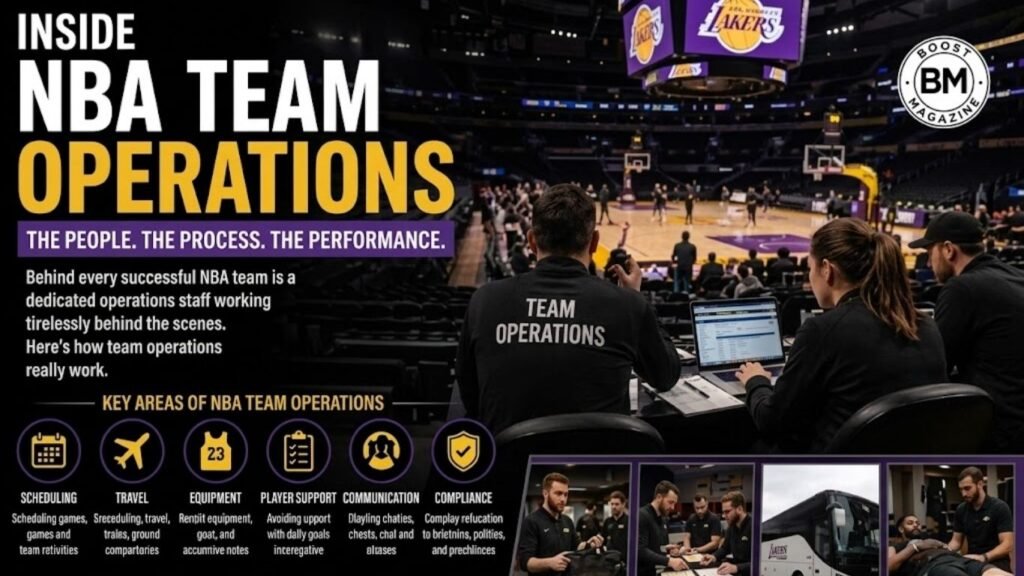
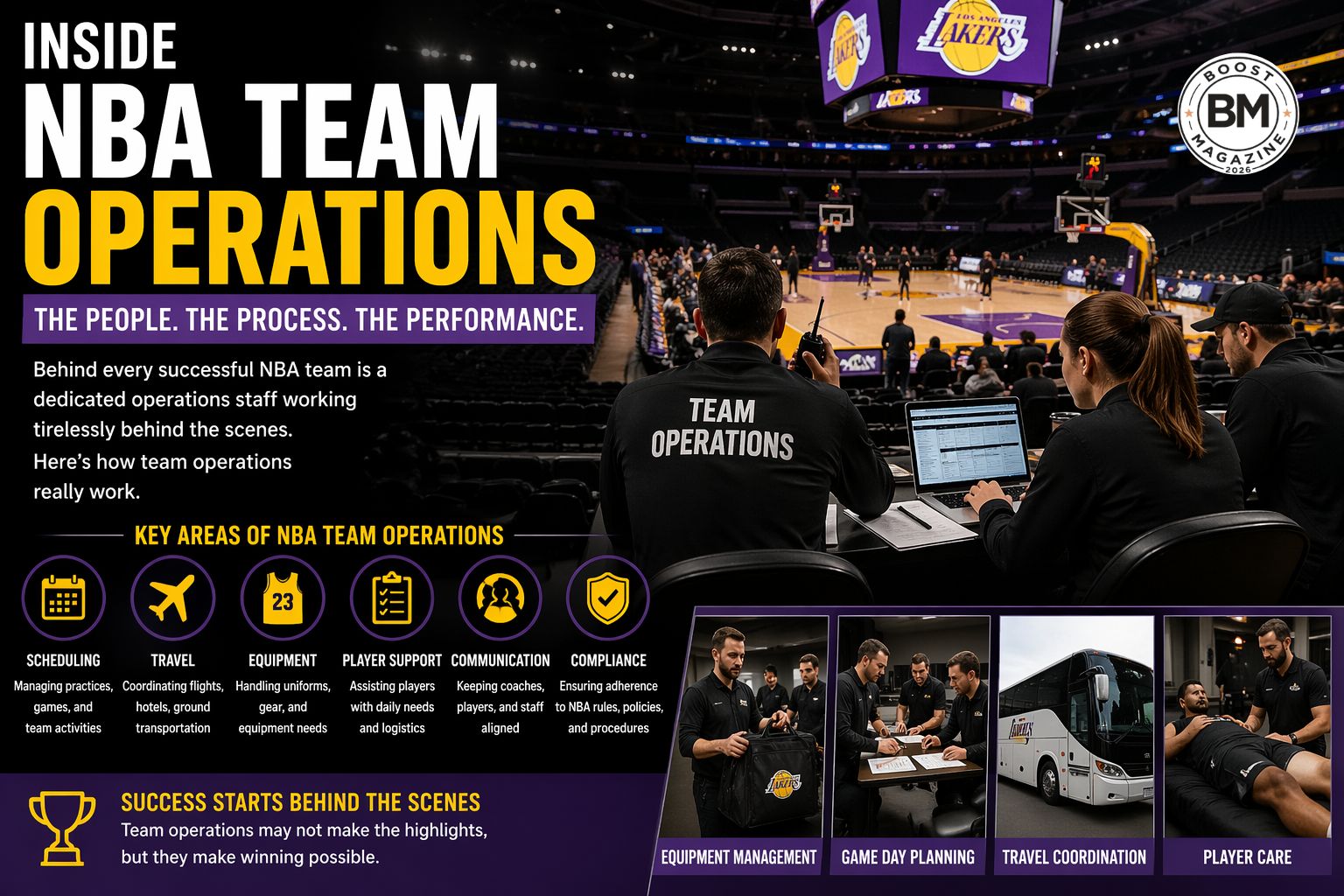
Then comes the team operations NBA department, which is often overlooked but essential. This group handles logistics, scheduling, travel, equipment, compliance, and day-to-day coordination. They ensure that players and coaches can focus entirely on performance without distractions.
In addition to operations, there are specialized departments such as medical staff, strength and conditioning teams, analytics departments, media relations, and player development staff. Each of these groups plays a role in maintaining a professional and competitive environment.
What makes NBA team structure unique is how interconnected everything is. No department works in isolation. A travel delay, a miscommunication, or poor scheduling can directly impact player performance. That’s why strong coordination between departments is critical.
Role of Team Operations Staff
The NBA staff roles within team operations are incredibly diverse, and their responsibilities extend into nearly every aspect of a team’s daily functioning. While titles may vary across franchises, the core responsibilities remain largely consistent.
At the center of this department is usually the Director of Team Operations. This person acts as the main organizer and coordinator for all logistical activities. Their job includes planning travel schedules, booking flights and hotels, coordinating practice times, and ensuring compliance with league rules.
One of the most demanding parts of team operations is managing travel. NBA teams play an 82-game regular season across different cities, often with tight schedules and back-to-back games. Operations staff must arrange flights, ground transportation, hotel accommodations, and meal plans, all while considering player recovery and comfort.
Equipment managers are another key part of the operations team. They are responsible for uniforms, practice gear, and game equipment. While this may sound simple, it requires careful attention to detail. Players often have specific preferences, and even small issues like the wrong shoe size or missing gear can disrupt preparation.
Another important role involves compliance and league coordination. The NBA has strict rules regarding player eligibility, contracts, and scheduling. Operations staff ensure that the team follows all regulations, avoiding penalties or administrative issues.
Communication is a central part of team operations. Staff members act as a bridge between players, coaches, executives, and external partners. They ensure everyone is informed about schedules, changes, and expectations. In a fast-paced environment like the NBA, clear communication can prevent confusion and costly mistakes.
Why Behind-the-Scenes Roles Matter
Understanding how NBA teams work requires recognizing the importance of roles that are not visible on television. While fans celebrate players and coaches, the reality is that behind-the-scenes staff play a major role in shaping team success.
The first reason these roles matter is consistency. NBA players perform at an elite level, but they rely on routine and stability. Team operations staff create an environment where players know exactly what to expect every day. This consistency reduces stress and allows players to focus entirely on their game.
Another reason is efficiency. The NBA schedule is demanding, with frequent travel and limited recovery time. Efficient planning by operations staff ensures that players get adequate rest, proper nutrition, and smooth transitions between games. Poor planning, on the other hand, can lead to fatigue and injuries.
Behind-the-scenes roles also contribute to professionalism. A well-run organization reflects discipline and attention to detail. This can influence player morale, team culture, and even a franchise’s reputation. Players are more likely to perform well in an environment where everything is organized and supportive.
In modern basketball, small advantages can make a big difference. Teams are constantly looking for ways to gain an edge, whether through analytics, training, or recovery methods. Team operations play a key role in implementing these strategies by ensuring that resources and plans are executed properly.
It’s also important to consider crisis management. Unexpected situations like travel delays, injuries, or schedule changes can disrupt a team’s rhythm. Operations staff are responsible for handling these challenges quickly and effectively, minimizing their impact on performance.
A real-world example of how important these roles are can be seen in professionals like Kathleen Nimmo Lynch, who has been associated with the Boston Celtics. Individuals in similar positions are responsible for ensuring that players, coaches, and staff can operate without disruption, handling essential logistics and coordination behind the scenes. This highlights how team operations staff contribute directly to the stability and performance of an NBA organization. This highlights how team operations staff contribute directly to the stability and performance of an NBA organization.
For more insight into her professional background, you can explore the full story of Kathleen Nimmo Lynch.
Real Impact on Team Performance
The connection between basketball team management and on-court performance is stronger than many people realize. While talent and coaching are critical, the efficiency of team operations can directly influence results.
One clear example is player recovery. In a long NBA season, fatigue is a major factor. Operations staff coordinate travel schedules, rest periods, and accommodations to help players recover as quickly as possible. Better recovery often leads to better performance and fewer injuries.
Another impact is preparation. Teams need structured practice sessions, video analysis, and strategy meetings. Operations staff ensure that facilities are available, schedules are organized, and all necessary resources are in place. This allows coaches to focus on game planning without logistical distractions.
Morale is another important factor. When players feel supported and comfortable, they are more likely to perform at their best. Simple things like timely travel arrangements, quality accommodations, and clear communication can significantly improve team morale.
Even during games, operations staff play a role. From ensuring equipment is ready to coordinating with arena staff, their work helps create a smooth game-day experience. Any disruption during this process can affect focus and performance.
Over the course of a season, these small details add up. A team that manages logistics well may have a slight advantage in energy, focus, and preparation compared to a poorly managed team. In a league as competitive as the NBA, even small edges can determine playoff positions or championship outcomes.
Real-world examples show that successful franchises often have strong organizational structures. While fans may credit star players, insiders understand that a well-run operations team is a key part of sustained success.
Conclusion
NBA team operations are the hidden engine that powers every franchise. While the spotlight remains on players and coaches, the work done behind the scenes is just as important. From managing travel and equipment to ensuring smooth communication and compliance, operations staff handle countless responsibilities that keep the team functioning at a high level.
Understanding NBA team operations gives a deeper appreciation of how professional basketball truly works. It highlights the importance of organization, planning, and teamwork beyond the court. Without these elements, even the most talented teams would struggle to maintain consistency and success.
In the end, basketball is not just about scoring points or winning games. It’s about creating an environment where every part of the organization works together seamlessly. That’s exactly what team operations make possible.
