

In today’s competitive economy, building a successful business is no longer just about having a great idea—it’s about making smart financial decisions and investing strategically. The business guide Aggr8Investing approach provides a structured system that combines business growth strategies with disciplined investing. This framework is designed especially for beginners and intermediate entrepreneurs who want to scale their business while also building long-term wealth.
Instead of separating business operations from investment planning, this approach integrates both into a single financial decision framework. It helps entrepreneurs manage cash flow, allocate capital efficiently, and create multiple income streams. Whether you are running a small business or planning a startup, understanding how to balance risk and reward is essential for sustainable financial growth.
What Is Business Guide Aggr8Investing? (Core Framework Explained)
The Aggr8Investing framework is a structured system that helps entrepreneurs connect business growth with long-term wealth creation. Instead of treating profits as money to spend, it focuses on using them as capital for future growth through smart allocation and reinvestment. This approach ensures that every financial decision contributes to stability, scalability, and sustainable success.
By combining business strategy with investment thinking, this framework helps reduce financial uncertainty and improve decision-making. It allows business owners to evaluate opportunities more effectively, balance risk with reward, and build a system that supports consistent growth over time.
Understanding the Concept and Approach
The Business Guide Aggr8Investing framework is built around a structured investment approach that aligns business growth with long-term financial planning. At its core, it focuses on making informed decisions about capital allocation, asset diversification, and reinvestment strategies. Instead of reacting to short-term trends, it encourages a disciplined investing mindset where every financial move is backed by analysis and strategy.
A business investment strategy, in simple terms, is how a business owner uses profits and resources to generate additional returns. This could involve reinvesting in the business, purchasing income-generating assets, or diversifying into different investment vehicles like equities or real estate. The key is to ensure that every decision contributes to long-term wealth building rather than short-term gains.
Why It Matters for Entrepreneurs and Small Businesses
For entrepreneurs, financial literacy is often the missing link between growth and sustainability. Many small businesses fail not because of lack of demand, but due to poor cash flow management and weak financial planning. The Business Guide Aggr8Investing framework helps address these issues by providing a clear roadmap for managing business capital effectively.
It also reduces financial uncertainty by offering a structured way to evaluate opportunities. For example, instead of blindly expanding operations, a business owner can assess ROI, opportunity cost, and risk-adjusted returns before making decisions. This approach not only improves profitability but also ensures long-term business sustainability.
The 4 Core Investment Strategies for Sustainable Growth
Investment strategies play a crucial role in determining how effectively wealth grows over time. Without a clear approach, entrepreneurs often make random financial decisions that lead to inconsistent results. These core strategies provide a structured way to allocate capital while balancing risk and potential returns.
By applying a mix of growth, value, income, and diversification strategies, individuals can create a more stable and scalable financial system. This not only improves long-term returns but also protects against market volatility and unexpected business challenges.
Growth Investing (High-Return Focus)
Growth investing focuses on opportunities that have the potential for significant returns over time. This includes startups, emerging markets, and innovative industries. Entrepreneurs often apply this strategy by reinvesting profits into expanding their business or launching new products. While the returns can be high, the risks are equally significant, making it important to combine this strategy with proper research and planning.
Value Investing (Undervalued Opportunities)
Value investing is about identifying assets that are undervalued by the market. This strategy requires a deep understanding of financial data, market trends, and intrinsic value. For example, buying a business or stock at a lower price than its actual worth can generate strong long-term returns. This approach emphasizes patience, discipline, and detailed ROI analysis.
Income Investing (Cash Flow Focus)
Income investing focuses on generating consistent cash flow through investments. This is particularly useful for business owners who want steady income streams to support operations or personal expenses. Investments such as dividend-paying stocks, bonds, or rental properties fall into this category. It is a low-risk approach compared to growth investing and provides financial stability.
Diversification Strategy (Risk Reduction)
Diversification is one of the most important principles in investing. It involves spreading investments across different asset classes to reduce risk. By diversifying into equities, mutual funds, real estate, and other assets, investors can protect themselves from market volatility. This strategy ensures a balanced portfolio and supports long-term financial growth.
The 4 Business Growth Strategies Every Entrepreneur Should Know
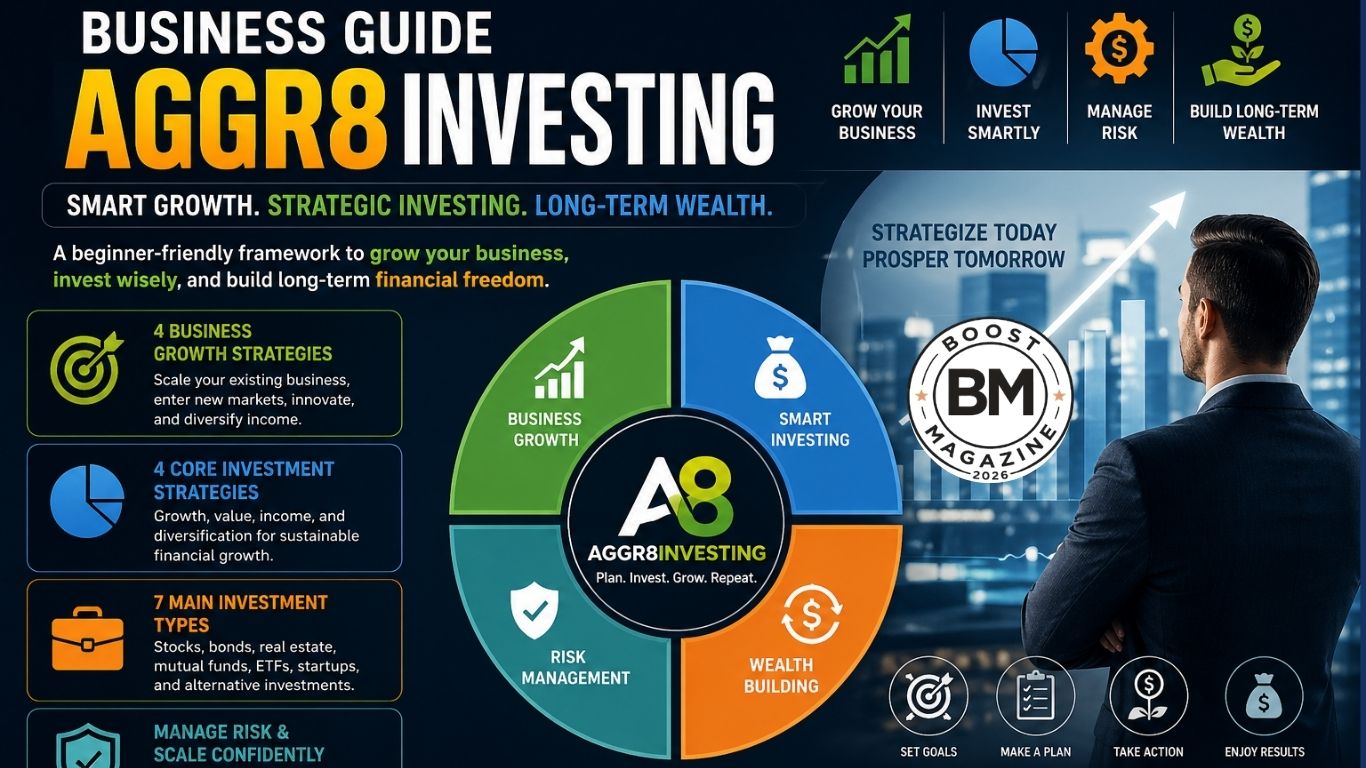
Business growth requires more than just effort—it requires a clear direction and structured planning. These four strategies provide a roadmap that helps entrepreneurs scale their business in a controlled and predictable way. Instead of relying on trial and error, they allow businesses to grow with purpose and strategy.
When applied correctly, these strategies help identify new opportunities, improve market positioning, and increase revenue streams. They also ensure that growth is sustainable, reducing the risk of over-expansion and financial instability.
Market Penetration (Scaling Existing Offers)
Market penetration focuses on increasing sales within existing markets. This can be achieved by improving marketing strategies, optimizing pricing, or enhancing customer experience. For example, a small business can use digital marketing to reach more customers without changing its core product or service.
Market Expansion (New Audiences)
Market expansion involves entering new markets or targeting new customer segments. This could mean expanding geographically or adapting products for a different audience. While this strategy offers growth opportunities, it requires thorough market research and careful planning to minimize risks.
Product Development (Innovation)
Innovation is key to staying competitive in today’s market. Product development involves creating new offerings or improving existing ones to meet customer needs. Businesses that invest in innovation often experience higher growth rates because they can adapt to changing market demands.
Diversification (New Revenue Streams)
Diversification in business means creating additional income streams beyond the core business. For example, a service-based business might launch digital products or courses. This reduces dependency on a single revenue source and improves overall business stability.
The 4 Types of Business Models Explained Simply
Understanding different business models is essential for choosing the right path for your entrepreneurial journey. Each model has its own strengths, limitations, and growth potential, which directly impact how a business operates and scales over time.
Selecting the right model allows entrepreneurs to optimize their operations, manage costs effectively, and build a system that supports long-term profitability. A clear business model also makes it easier to identify opportunities for expansion and innovation.
Service-Based Businesses
Service-based businesses rely on skills and expertise to generate income. Examples include consulting, freelancing, and professional services. These businesses require minimal investment but can be limited by time and capacity.
Product-Based Businesses
Product-based businesses involve selling physical or digital goods. This model offers scalability but requires proper inventory and supply chain management. Success depends on efficient operations and strong market demand.
Online/Digital Businesses
Digital businesses operate primarily online and include e-commerce stores, SaaS platforms, and content-based ventures. These businesses can reach global audiences and offer high scalability with relatively low operational costs.
Hybrid Models
Hybrid business models combine elements of different types. For example, a business might offer services while also selling products. This approach provides flexibility and allows entrepreneurs to diversify their income streams.
The 7 Main Investment Types You Should Know
A well-balanced investment portfolio is built on understanding different types of assets and how they perform under various conditions. Each investment type offers unique benefits and risks, making it important to combine them strategically.
By diversifying across multiple asset classes, investors can reduce risk while improving overall returns. This approach creates a more stable financial foundation and supports long-term wealth building.
Stocks (Equities)
Stocks represent ownership in a company and offer high potential returns. However, they are subject to market fluctuations and require careful analysis.
Bonds
Bonds are fixed-income investments that provide stable returns. They are considered safer than stocks and are suitable for conservative investors.
Real Estate
Real estate investments include residential and commercial properties. They offer both rental income and capital appreciation, making them a popular choice for long-term investors.
Mutual Funds
Mutual funds pool money from multiple investors to invest in a diversified portfolio. They are managed by professionals and are suitable for beginners.
ETFs (Exchange-Traded Funds)
ETFs are similar to mutual funds but are traded on stock exchanges. They offer diversification and flexibility at lower costs.
Startups & Private Equity
Investing in startups can yield high returns but comes with significant risks. This type of investment is suitable for experienced investors.
Alternative Investments
Alternative investments include assets like commodities, cryptocurrencies, and collectibles. They add diversification but require a strong understanding of the market.
Understanding the 7-5-3-1 Rule in Business and Investing
The 7-5-3-1 rule is a simplified framework designed to help individuals manage their priorities and resources more effectively. It breaks down complex financial and business decisions into a structured format, making them easier to understand and implement.
This approach helps entrepreneurs stay focused, avoid overcomplicating their strategies, and maintain a balance between growth, learning, and financial planning. It provides clarity and direction, which are essential for consistent progress.
Breakdown of the Rule
The 7-5-3-1 rule is a simplified framework that helps individuals manage their time, resources, and investments effectively. It provides a structured approach to prioritizing financial goals.
How It Applies to Financial Goal Setting
This rule can be used to allocate resources across different areas such as business growth, investments, and savings. It ensures a balanced approach to financial planning.
Real-Life Example
For instance, an entrepreneur might allocate resources across different projects, investments, and savings plans based on this rule. This helps maintain focus and prevents overextension.
Building a Strong Investment Portfolio (Step-by-Step Guide)
Building a strong investment portfolio requires careful planning and disciplined execution. It is not just about choosing assets, but about aligning those investments with clear financial goals and risk tolerance.
A well-structured portfolio ensures stability while allowing for growth over time. Regular monitoring and adjustments help maintain balance and keep the portfolio aligned with changing market conditions and personal objectives.
Setting Financial Goals
The first step in building a portfolio is defining clear financial goals. Whether it is long-term wealth creation or passive income, having a goal provides direction.
Choosing Investment Vehicles
Selecting the right investment vehicles depends on risk tolerance and expected returns. A diversified portfolio may include stocks, bonds, real estate, and funds.
Balancing Risk and Reward
Balancing risk and reward is crucial for long-term success. Investors must evaluate their comfort level with risk and adjust their strategies accordingly.
Portfolio Rebalancing
Regular portfolio rebalancing ensures that investments remain aligned with financial goals. It involves adjusting asset allocation based on market performance.
How to Scale a Business While Managing Risk Effectively
Scaling a business is a complex process that requires both strategic planning and financial discipline. Without proper risk management, rapid growth can lead to operational and financial challenges that may harm the business.
By focusing on structured growth, cash flow management, and smart reinvestment, businesses can expand sustainably. This approach ensures that strong financial foundations and long-term planning support growth.
Risk Management Basics
Risk management involves identifying potential threats and developing strategies to minimize them. This includes financial, operational, and market risks.
Cash Flow Optimization
Maintaining healthy cash flow is essential for business growth. It ensures that the business can meet its obligations while investing in expansion.
Profit Reinvestment Strategy
Reinvesting profits into the business supports growth and innovation. However, it should be balanced with maintaining reserves for stability.
Growth Capital Planning
Growth capital planning involves securing resources for expansion. This could include external funding, partnerships, or strategic investments.
Frequently Asked Questions
How to solve the rule of 72?
The rule of 72 is a simple way to estimate how long it will take for an investment to double. You divide 72 by the annual interest rate. For example, if your investment earns 8% per year, it will take approximately 9 years to double. This concept highlights the importance of compound interest in long-term investing.
What is the rule of 7%?
The 7% rule refers to an average annual return often used in financial planning. It helps investors estimate the long-term growth of their portfolio. For example, at a 7% return, investments can grow significantly over time due to compounding.
Why are 75 days for 75 Hard?
The 75 Hard challenge is designed to build discipline and mental toughness over a structured period. While it is not directly related to investing, the habits it builds—consistency, focus, and commitment—are essential for achieving success in business and financial growth.
Conclusion
The business guide Aggr8Investing framework provides a complete roadmap for entrepreneurs who want to grow their business while building long-term wealth. Combining strategic business planning with disciplined investing, it helps individuals make smarter financial decisions and reduce risks. Whether you are just starting or looking to scale, applying these principles can lead to sustainable growth and financial success.
