
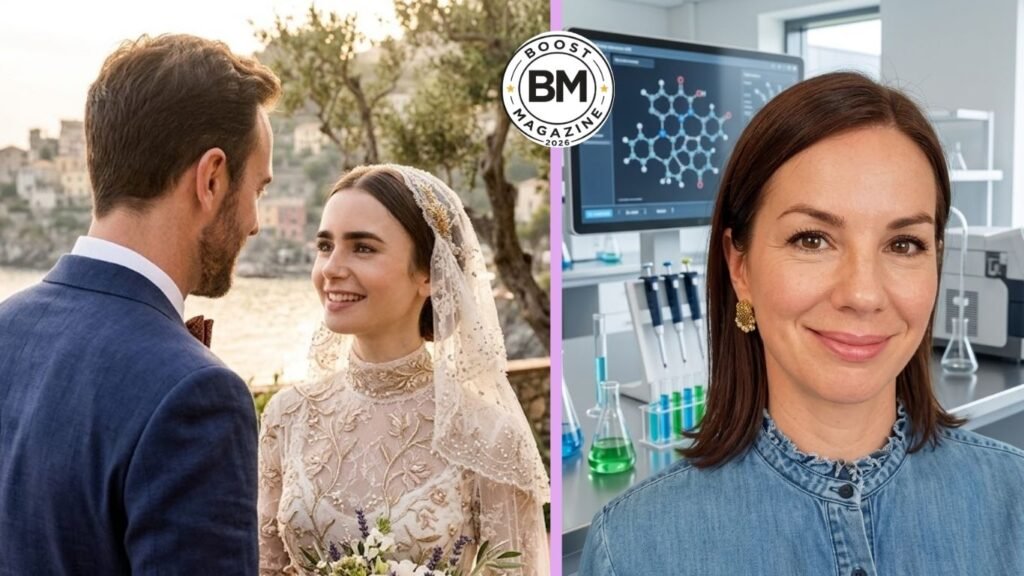

Charlotte Faircloth is not a name you’ll find splashed across tabloid headlines or trending on social media. Yet she is one of the most respected academics working in Britain today, and her research has quietly shaped the way scholars, policymakers, and parents think about modern family life. As a Professor of Family and Society at University College London, her work touches something deeply personal — how society tells parents what “good parenting” looks like, and what the pressure to live up to that standard actually does to families.
Most people first come across her name through a Google search about BBC journalist Amol Rajan. And while her marriage to one of Britain’s most recognisable broadcasters has brought her a degree of public attention, Charlotte Faircloth’s own story is far more layered than being anyone’s spouse. Her academic career, stretching across Cambridge, Kent, Roehampton, and UCL, represents decades of rigorous, original research into the social forces that shape reproduction, parenthood, and gender.
This biography brings together what is publicly known about her life — from her education and academic contributions to her personal life with Amol Rajan and their family. It aims to be a full, honest picture of a woman who, despite being one of Britain’s leading social scientists, has largely been written about only in the context of someone else’s career.
Key Facts and Biography Summary of Charlotte Faircloth
| Detail | Information |
|---|---|
| Full Name | Charlotte Faircloth |
| Nationality | British |
| Profession | Academic, Professor, Social Anthropologist |
| Current Position | Professor of Family and Society, UCL |
| University | University College London (UCL) |
| PhD | Social Anthropology, University of Cambridge |
| Notable Book | Militant Lactivism? (Berghahn Books, 2013) |
| Research Focus | Parenting culture, gender, reproduction, family life |
| Husband | Amol Rajan (married September 2013) |
| Children | Four children (including Winston and Jamaica) |
| Key Projects | 50 Years of Becoming a Mother (UKRI-funded) |
| Professional Affiliations | Thomas Coram Research Unit, Repro@UCL, Centre for Parenting Culture Studies |
Who Is Charlotte Faircloth?
Charlotte Faircloth is a British academic, social anthropologist, and sociologist whose career has focused on how modern Western societies understand and regulate parenthood. She currently holds the title of Professor of Family and Society at the UCL Social Research Institute, one of the leading institutions for social science research in the United Kingdom. Alongside her professorial role, she serves as Co-Director of the Thomas Coram Research Unit, a respected centre focused on children, families, and social welfare. She is also one of the directors of the UCL Centre for Human Reproduction, where she leads Repro@UCL — an interdisciplinary network connecting social science and humanities researchers studying reproduction in its broadest sense.
What makes her stand out in British academia is the breadth of her interests combined with the consistency of her central question: what does it mean to be a “good parent” in contemporary society, and who gets to decide? Her work draws on both sociology and social anthropology, using qualitative methods and cross-cultural comparisons to examine how parenting norms differ between countries, communities, and generations. She has studied infant feeding practices, couple relationships, intergenerational family dynamics, and most recently, the ways the COVID-19 pandemic reshaped family life and caregiving.
Charlotte is also a public intellectual in the truest sense. She contributes expert commentary to outlets including BBC News, Channel 4 News, Newsnight, Woman’s Hour, PM, The Times, and The Guardian. Her ability to translate complex academic ideas into language that resonates with ordinary readers and viewers has extended her influence well beyond the university lecture hall.
Early Life, Family Background and Nationality
Charlotte Faircloth is British. She was raised in the United Kingdom and pursued her entire academic career at British universities, though her research has taken her across Europe, particularly to France for comparative fieldwork on parenting culture. Her nationality is not something she has needed to comment on publicly — she is firmly embedded in British academic and public life.
Details about her early life, family background, and parents are not publicly available. She has never spoken openly about her upbringing in interviews or academic profiles, and no verified information exists about where she grew up or who her parents are. This is not unusual for academics, especially those who study sensitive topics like family life and gender. Many researchers in this field are careful to maintain a clear boundary between their personal history and their professional work.
What can be reasonably inferred from her academic timeline is that she received a strong early education that set her on the path to one of the most competitive undergraduate courses at a leading British university. Her decision to study archaeology and anthropology suggests an early curiosity about human cultures and social organisation — the kind of intellectual appetite that tends to develop early. Beyond this, Charlotte Faircloth has chosen to let her work speak for her rather than her biography, a choice that deserves to be respected even as readers search for more personal detail.
Education and Academic Journey
Charlotte Faircloth’s academic credentials are genuinely impressive. She holds an MA (Hons) in Archaeology and Anthropology, an MPhil in Social Anthropological Research, and a PhD in Social Anthropology — all building toward one of the most specialised and rigorous academic profiles in her field. Her PhD was completed at the Department of Social Anthropology at the University of Cambridge, where she explored women’s experiences of attachment parenting and long-term breastfeeding in both London and Paris. This comparative, cross-cultural approach — looking at the same phenomenon in two different national contexts — became a hallmark of her research style.
After completing her doctorate, she was awarded the Mildred Blaxter Postdoctoral Research Fellowship with the Foundation for the Sociology of Health and Illness. This prestigious fellowship gave her the resources and academic space to develop her doctoral research into her first major book. She also received a Leverhulme Trust Early Career Fellowship, further cementing her status as one of the most promising voices in British social science. These fellowships are competitive and are typically awarded only to researchers whose work shows both originality and scholarly rigour.
She also holds a PGCHE (Postgraduate Certificate in Higher and Community Education), reflecting her commitment to teaching and pedagogical practice as well as research. Her early career took her through positions at the University of Roehampton and the University of Kent before she joined UCL. At Kent, she became a founding member of the Centre for Parenting Culture Studies (CPCS), an interdisciplinary research hub that brought together scholars examining how parenting has shifted from a private family matter to a subject of intense public debate and policy intervention. That founding involvement tells you something important about who Charlotte Faircloth is — not just someone who studies a subject, but someone who helps build the academic infrastructure around it.
Charlotte Faircloth’s Career in Anthropology
Charlotte Faircloth’s career path has followed a clear intellectual thread from the beginning. Starting as a lecturer at UCL’s Institute of Education, she steadily built a reputation as one of the sharpest minds working on the intersection of anthropology, family sociology, and social policy. Over time, her institutional role grew — from lecturer to associate professor to, in October 2025, full Professor of Family and Society at the UCL Social Research Institute. That promotion reflects the esteem in which her colleagues and the wider academic community hold her.
Her work spans multiple roles within UCL. As Co-Director of the Thomas Coram Research Unit, she helps steer major research projects and collaborates with an international community of scholars. As a director of the UCL Centre for Human Reproduction, she contributes to conversations that connect social science with medical research, ethics, and public policy. Her leadership of Repro@UCL means she is also actively building academic networks, convening researchers from sociology, anthropology, ethics, medicine, and the humanities to work together on questions about reproduction and family formation.
Beyond UCL, she has taught as a visiting lecturer at the Universities of Cambridge and Kent, contributing to courses on family, kinship, reproduction, gender, and research methodology. This kind of mobility across institutions, combined with founding membership of the Centre for Parenting Culture Studies, marks her as someone whose influence extends across British academia rather than being confined to a single institution. She also supervises doctoral students, shaping the next generation of social scientists who will carry these ideas forward.
Research Interests and Theoretical Approach
At the heart of Charlotte Faircloth’s research is a question that sounds simple but turns out to be extraordinarily complex: what does it mean to be a good parent? She approaches this not as a moral question with a correct answer, but as a sociological puzzle. Why do certain parenting practices become elevated as the “right” way to raise children? Who promotes these standards, and what happens to parents who can’t or won’t meet them? Her research consistently shows that the pressure to parent in specific ways is not neutral — it is shaped by class, gender, culture, and the authority of expert knowledge.
Her theoretical approach blends social anthropology with sociology, using qualitative methods such as ethnographic fieldwork and in-depth interviews. This allows her to get close to people’s actual experiences rather than working with survey data from a distance. Her comparative work between the UK and France has been particularly valuable because it reveals how assumptions about parenting that seem “natural” or universal are actually culturally specific. French and British mothers who practice the same parenting techniques often articulate very different reasons for doing so and face very different social responses — something that gets lost when you study only one national context.
One of her recurring concerns is what scholars call “intensive parenting” — the idea that modern middle-class parenting involves an extraordinary investment of emotional, financial, and physical resources in children’s development. Faircloth doesn’t moralise about this; instead, she examines how this norm emerged, how it is sustained by expert advice and media culture, and what its consequences are — particularly for mothers, who still carry the majority of this invisible labour. Her research makes clear that parenting is never just a private matter. It is always already a social, political, and cultural act.
Books, Publications and Scholarly Contributions
Charlotte Faircloth’s most widely read book is Militant Lactivism? Attachment Parenting and Intensive Motherhood in the UK and France, published by Berghahn Books in 2013. The title refers to a particular style of parenting that emphasises intense physical closeness and prolonged breastfeeding, and Faircloth’s research explored why some mothers adopt these practices with near-evangelical commitment while others find them alienating or exhausting. Her findings were nuanced — she found that for many women, these practices were bound up with questions of identity, authenticity, and the desire to be a “good mother” in a cultural environment that offers very little structural support for parents.
Beyond that book, she has contributed extensively to academic journals in sociology, anthropology, and social policy. Her work has appeared in publications covering reproductive health, family studies, gender, and the sociology of knowledge. She has also edited academic volumes and contributed chapters to major works on contemporary parenthood, positioning her as an organiser of scholarly knowledge as much as a producer of it.
One of her most significant ongoing projects is a large UKRI-funded study titled 50 Years of Becoming a Mother, which she leads alongside Ann Oakley and Meg Wiggins. The project revisits Oakley’s landmark 1970s study of the same name, offering a rare chance to compare how women’s experiences of becoming mothers have changed across half a century. It is the kind of longitudinal, generational research that rarely gets funded and even more rarely gets executed well — the fact that Faircloth is leading it says a great deal about the confidence the academic community places in her.
Her Role at UCL and Professional Achievements
UCL has been the central hub of Charlotte Faircloth’s career for a significant portion of her professional life. Her journey there began when she joined as a lecturer in the Department of Social Science at the UCL Institute of Education, and over the years she has built a role that spans research leadership, teaching, public engagement, and institutional management. The Thomas Coram Research Unit, which she co-directs, has been conducting important research on children and families since the 1970s — being part of its leadership team places her within a long tradition of socially impactful scholarship.
Her promotion to full Professor in October 2025 was recognition of an academic career that had consistently combined high-quality research with public relevance. She doesn’t just publish papers for other academics to read. She contributes to BBC programmes, gives expert comment to national newspapers, and speaks at events that bring academic research into contact with policymakers, practitioners, and the public. This public-facing dimension of her work is something UCL actively values, and it distinguishes her from researchers who work only within the boundaries of their discipline.
She has also mentored doctoral students and early-career researchers, many of whom are now building their own careers in social science. Teaching has remained important to her throughout her career — she has taught on gender, research methodology, family, kinship, and reproduction at UCL, Kent, and Cambridge. In a field where “teaching versus research” tensions are common, Faircloth appears to have managed both with genuine commitment.
Charlotte Faircloth and Amol Rajan: Relationship and Marriage
Charlotte Faircloth and Amol Rajan met during their time at the University of Cambridge, where both were studying — Charlotte in social anthropology, Amol reading History. They married in September 2013 in a ceremony held at Guildhall Place in Cambridge, choosing the city where they had first connected as the setting for their wedding. The ceremony was private and low-key, reflecting the couple’s shared preference for keeping their personal life separate from their professional identities.
Amol Rajan has since become one of the most recognisable faces and voices in British media. He was appointed editor of The Independent in 2013, becoming the first non-white editor of a national British newspaper in over a century. From 2016, he joined the BBC as Media Editor, and later became a presenter on BBC Radio 4’s Today programme and the host of University Challenge. His public profile has grown considerably over the years, which has inevitably drawn more attention to Charlotte as well — though she has never sought that attention herself.
The couple is described by those who know them as a genuine intellectual partnership. Amol has spoken about Charlotte in interviews with warmth and respect, and the fact that his own journalistic work often engages with social and cultural issues gives them common ground beyond their shared personal life. They live in London with their children, and by all accounts, navigate the challenge of two demanding careers and a large family with a sense of humour and mutual support.
Their Wedding, Family Life and Children
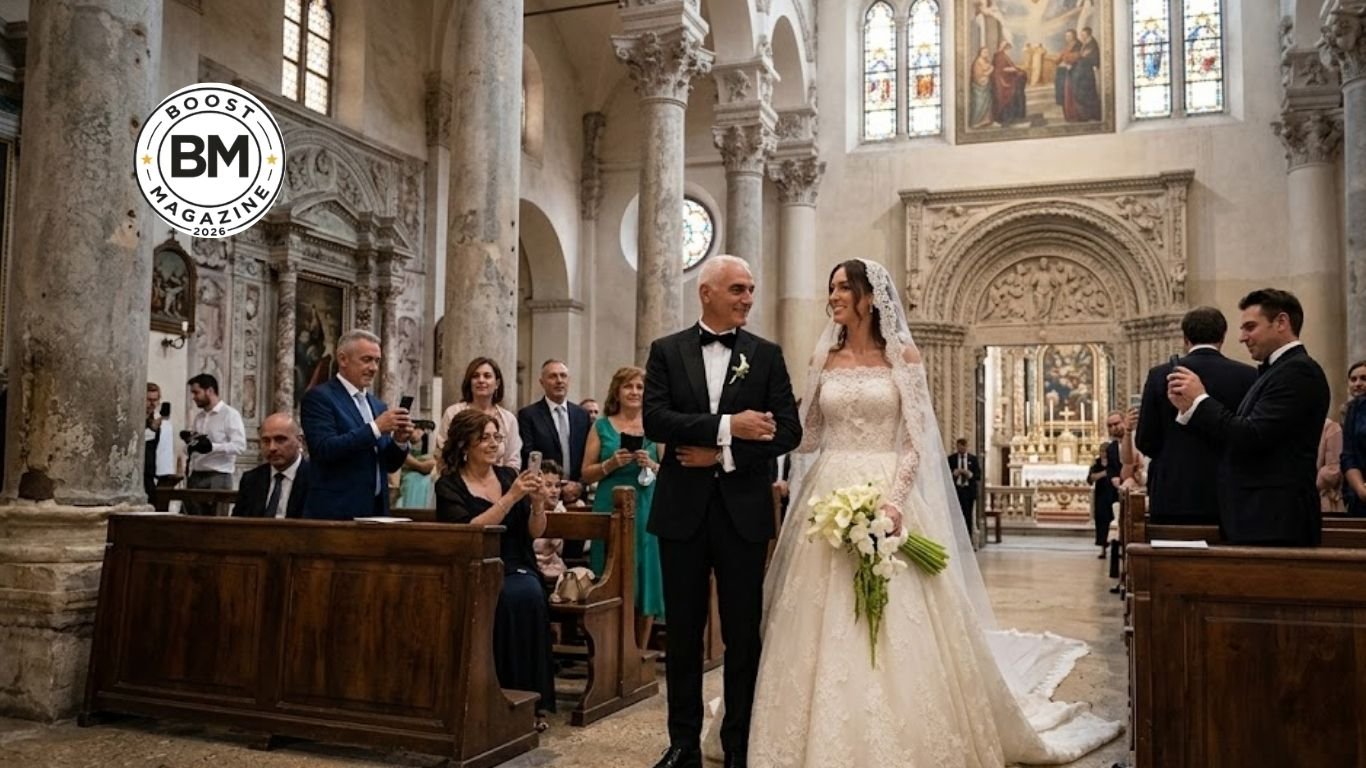
The wedding of Charlotte Faircloth and Amol Rajan in September 2013 in Cambridge was, by every account, a private and meaningful occasion. Details are not widely available because neither Charlotte nor Amol has chosen to share them publicly. What is known is that the ceremony took place in Guildhall Place, Cambridge, and that it reflected the couple’s values — thoughtful, understated, and rooted in their shared connection to that city.
Charlotte and Amol have four children together. Their eldest son is named Winston, and their daughter is named Jamaica — names Amol has referenced publicly on a few occasions, with obvious affection. The family’s full picture, including the names and ages of their younger two children, has been kept private. Amol has been open about the fact that the family’s path to having four children was not straightforward. He has spoken publicly about the couple going through IVF treatment, describing it as “hellish” and “exhausting” — and noting that at one point they were told they might not be able to have more children. His openness about this experience has been appreciated by many couples who have faced similar struggles.
The children are all relatively young, and the family lives together in London. Amol has spoken about how becoming a father changed his sense of priorities — noting that it was a major shift to suddenly feel that his life was no longer just about his own work and ambitions. Charlotte’s research, which has always been about how parents navigate the emotional and social dimensions of raising children, takes on a particular resonance given her own experience as the mother of four.
Public Profile, Media Attention and Personal Privacy
Charlotte Faircloth occupies an interesting position in public life. She is not a celebrity in any conventional sense, but she is a genuine public intellectual — someone whose expert views are sought by national media outlets and whose research informs public debate. She has been quoted in major newspapers, appeared on high-profile radio and television programmes, and contributes regularly to discussions about parenting, gender, and family policy. At the same time, she has maintained a largely private personal life, keeping her social media presence minimal and rarely appearing in the kind of lifestyle coverage that would give the public a sense of who she is outside of work.
This combination — media-visible professionally, media-absent personally — is actually quite consistent with what she researches. Her academic work explores how public and private spheres interact in family life, and how personal choices about parenting are subject to social scrutiny and moral judgement. It would make a certain sense for someone who understands that dynamic so clearly to protect her own family’s privacy with some care.
The attention she receives is almost entirely a consequence of her marriage to Amol Rajan. Internet searches for her name spike when he is in the news, and most of the online coverage of her life is framed around her relationship to him rather than her own work. This article has tried to reverse that framing — not because her marriage is unimportant, but because Charlotte Faircloth’s academic and intellectual contributions are substantial enough to deserve attention on their own terms.
Frequently Asked Questions About Charlotte Faircloth
Who is Charlotte Faircloth?
Charlotte Faircloth is a British academic and Professor of Family and Society at the UCL Social Research Institute. She is one of the UK’s leading researchers on parenting culture, gender, and reproduction.
What does Charlotte Faircloth do for a living?
She is a professor, researcher, and public intellectual. At UCL, she leads research projects, teaches, and co-directs the Thomas Coram Research Unit. She also contributes expert commentary to national media.
Is Charlotte Faircloth married to Amol Rajan?
Yes. Charlotte Faircloth and Amol Rajan married in September 2013 in Cambridge.
How many children do Charlotte Faircloth and Amol Rajan have?
They have four children together. Their eldest is a son named Winston and their daughter is named Jamaica. The names of their younger children have not been publicly shared.
What is Charlotte Faircloth’s most well-known book?
Militant Lactivism? Attachment Parenting and Intensive Motherhood in the UK and France, published by Berghahn Books in 2013.
Where did Charlotte Faircloth do her PhD?
She completed her PhD in Social Anthropology at the University of Cambridge.
What university does Charlotte Faircloth work for?
University College London (UCL), where she is Professor of Family and Society at the Social Research Institute.
What is Charlotte Faircloth’s nationality?
She is British.
Conclusion
Charlotte Faircloth has built something genuinely rare — a career in which academic rigour and public relevance reinforce each other. Her research on parenting culture, intensive motherhood, reproductive decision-making, and gender roles has shaped how British scholars, policymakers, and journalists think about family life. The fact that she does this work while raising four children with a high-profile media partner, and still maintains her own strong institutional identity at UCL, says something about both her professional drive and her sense of who she is beyond the roles others assign to her.
She remains one of the more private public figures you are likely to come across — a researcher who is genuinely important in her field, occasionally visible in national media, and yet largely absent from the kind of personal coverage that tends to follow people connected to famous names. That privacy deserves respect, even as the public’s curiosity about her life is understandable. For those genuinely interested in her work, exploring her academic publications, UCL profile, and contributions to outlets like The Guardian and BBC programmes will reveal far more about who she is than any tabloid profile ever could.
For the latest updates on Charlotte Faircloth’s research projects, academic contributions, and public commentary, following UCL’s Social Research Institute and keeping an eye on her media appearances remains the most reliable way to stay informed.