
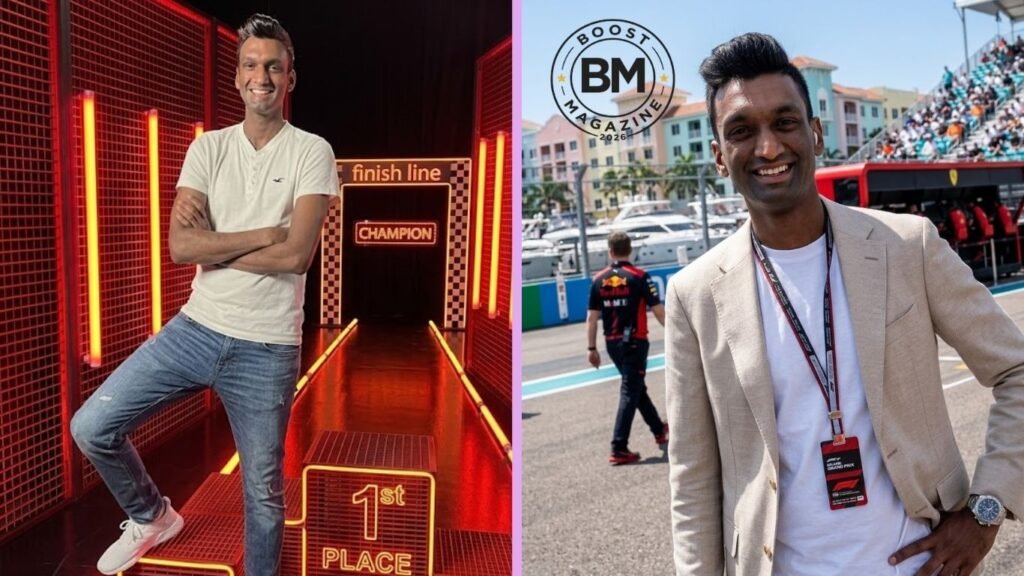

There are plenty of faces in the Formula 1 paddock who turn up on screen and read out results. Lawrence Barretto is not one of them. Over the better part of two decades, he has built a reputation as one of the most informed, reliable, and genuinely curious voices in motorsport media — a journalist who arrived at the top of his field the slow way, through newsrooms, bylines, and race weekends rather than celebrity shortcuts. For fans who follow Formula 1 closely, his name is familiar from Formula1.com, F1 TV, and Channel 4 coverage. For those newer to the sport, he is often the person who makes a complicated grid situation or a technical regulation change finally click into place.
What sets him apart in a crowded media landscape is not just access — plenty of journalists get paddock passes — but what he does with it. Barretto has consistently prioritised clarity and context over noise. That approach has made him a trusted figure not only with fans but with the drivers, team principals, and engineers he covers every season. His career arc, from a local newspaper in Surrey to chief correspondent for Formula One Management, is worth understanding in full.
Who Is Lawrence Barretto?
Lawrence Barretto is a British journalist, broadcaster, and motorsport correspondent widely regarded as one of the most authoritative voices covering Formula 1 today. Born on July 15, 1984, in Frimley, England, he grew up with parents of Sri Lankan heritage who had emigrated to the United Kingdom before his birth. That multicultural background shaped his worldview early — and would later give him an instinctive ability to communicate across different audiences, something that matters enormously when you are covering a sport followed by hundreds of millions of people across dozens of countries.
He is not a former racing driver offering retrospective insight, nor a television personality who stumbled into sports media. Barretto came up through print journalism, learned his craft covering everything from cricket to athletics, and gradually became one of the most specialised and respected F1 correspondents working today. As of 2025, he holds the title of chief correspondent for Formula One Management and serves as lead writer for Formula1.com, while also contributing to Channel 4’s Formula 1 coverage in the United Kingdom.
The question people most often ask: Is Lawrence Barretto an F1 driver? — has a straightforward answer: no. He has never competed in the sport. His connection to Formula 1 is through journalism, and it is a connection built carefully over many years. He is the person interviewing the champions, explaining the regulations, and breaking down the driver market stories that obsess fans during the off-season. That role, done well, requires as much preparation and precision as almost anything else in the paddock.
Early Life, Family Background, and Education
Lawrence Barretto grew up in Frimley, a town in Surrey, England, at a time when Formula 1 was experiencing one of its most dramatic eras — the height of Ferrari dominance in the early 2000s and the rise of the sport’s global television audience. He has spoken publicly about developing a love for the sport early, including watching races with his father, which planted the seed for a career that would eventually place him at the heart of the paddock. That kind of early immersion tends to produce journalists who understand the sport instinctively rather than learning it from the outside.
His parents, both of Sri Lankan descent, brought their son up with values he has referenced publicly — hard work, honesty, and a respect for the craft of whatever you choose to do. Those values are visible in his professional output, which has consistently favoured depth over speed and accuracy over assumption. He pursued his interest in journalism formally, studying the subject at the University of Sheffield, where he graduated in 2006. Sheffield’s journalism programme has a strong reputation in the United Kingdom, and Barretto left with the foundations of a career that would eventually span local newspapers, national broadcasters, specialist publications, and official sports media.
His educational and family background point toward a journalist who was never simply handed a platform. The path from Frimley to the Formula 1 paddock was built in stages, shaped by a genuine passion for sport and a willingness to start at the bottom of the industry and work upward. That trajectory is increasingly rare in sports media and gives his perspective a credibility that is hard to manufacture.
How Lawrence Barretto Started His Journalism Career
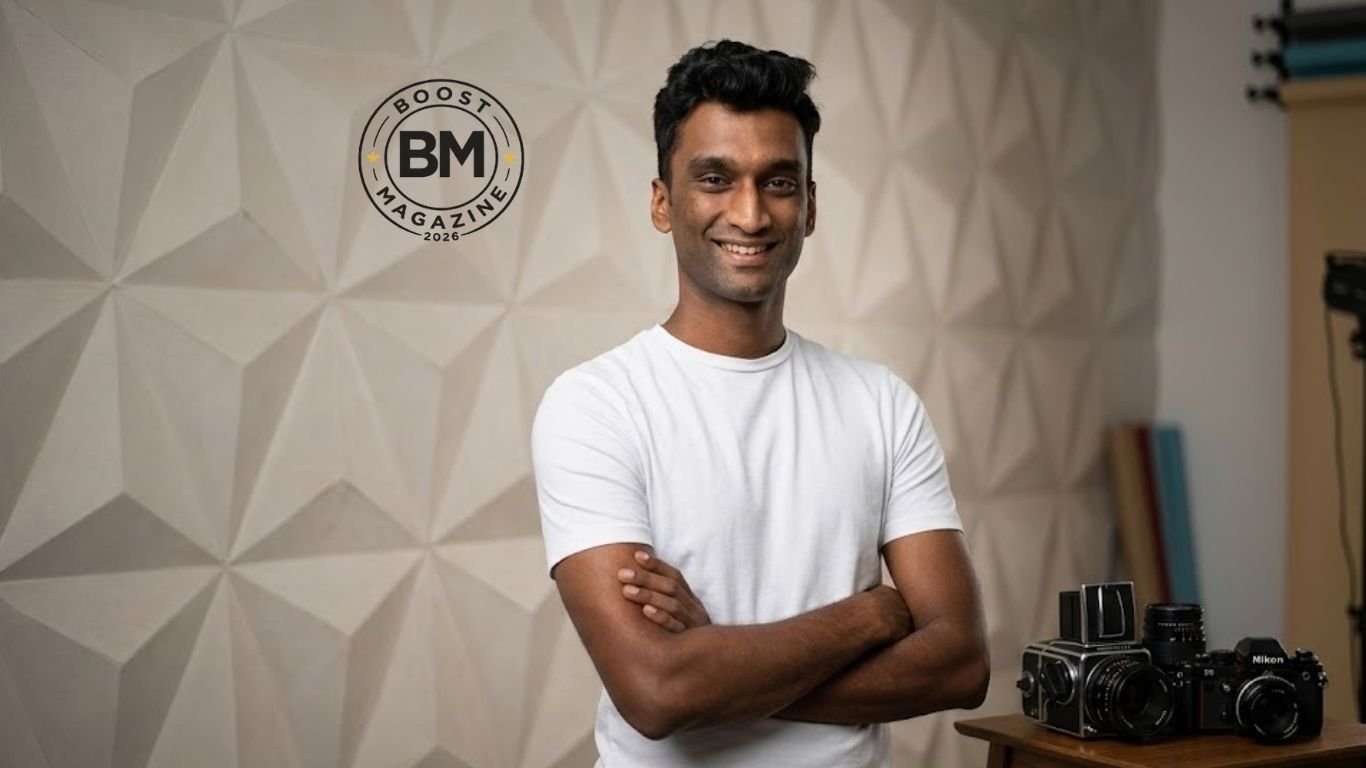
After graduating from the University of Sheffield in 2006, Lawrence Barretto began his professional life the way most serious journalists do — at a local newspaper. He joined the Surrey Advertiser as a sports reporter, where the work involved covering the full breadth of regional sport with limited resources and tight deadlines. Local journalism is often underestimated as a training ground, but it is one of the most demanding environments a young writer can enter. Stories need to be found, verified, and filed quickly, often without the support structures available at larger organisations.
A breakthrough moment came when Barretto won the Bridgestone e-Reporter Competition, a contest that awarded a young journalist the opportunity to cover the Hungarian Grand Prix. That experience — working at a Formula 1 race weekend for the first time in a professional capacity — appears to have confirmed the direction he wanted his career to take. It also demonstrated something important about his approach: he was willing to put himself forward, compete for opportunities, and prove his ability in a high-pressure environment. Winning that kind of competition is not simply about being a good writer; it requires showing that you can function effectively in one of the most logistically complex media environments in world sport.
In 2008, Barretto joined BBC Sport, where he spent several years working as a live text commentator, roving reporter, and general sports journalist. The BBC role broadened his experience considerably, taking him to major events including the London 2012 Olympics and Wimbledon. Covering events of that scale — where global attention is high, deadlines are unforgiving, and accuracy is non-negotiable — gave him a professional foundation that would serve him well when he eventually narrowed his focus to Formula 1 specifically.
His Journey Into Formula 1 Reporting
The transition into specialist Formula 1 coverage began in earnest when Lawrence Barretto joined Autosport, one of the world’s most respected motorsport publications, in 2015. Autosport has long been the publication of record for serious racing fans — the kind of outlet where readers already understand the sport deeply and expect the same from the journalists covering it. Moving there from a broader sports journalism background required Barretto to demonstrate a level of technical and contextual knowledge that goes well beyond what general sports writing demands. He rose to the challenge, eventually becoming an F1 correspondent and spending nearly three years covering the sport at close range.
His time at Autosport involved attending races, interviewing drivers and team officials, writing testing reports, and staying across the daily flow of paddock information that shapes a Formula 1 season. That pace of work — constant, detail-heavy, requiring strong source relationships — is where many motorsport journalists develop their deepest understanding of the sport. Barretto covered driver developments, team dynamics, regulation changes, and performance stories across some competitive and transitional seasons in Formula 1, all of which contributed to the breadth of knowledge he would bring to his next role.
In 2018, he made what turned out to be the most significant move of his career, joining Formula 1 directly as a senior writer and editor. His responsibilities included leading news coverage, writing features and analysis for Formula1.com, and contributing to the official F1 App. He was no longer covering the sport from the outside — he was part of the official media operation that shapes how Formula 1 presents itself to the world. It was a transition that reflected both his standing in motorsport journalism and the ambitions of Formula One Management to build a more substantial in-house media capability.
Lawrence Barretto’s Role at Formula1.com and F1 TV
Since joining the official Formula 1 media team, Lawrence Barretto’s responsibilities have expanded significantly. In 2022, he was promoted to correspondent and presenter, and by 2025 he had been confirmed in the role of chief correspondent for Formula One Management. That title reflects the seniority of his position — he is not simply one of several writers producing content for the website, but the leading editorial voice behind much of the sport’s official written and broadcast journalism. His work spans Formula1.com features and news, F1 TV programming, official video content, and contributions to Channel 4’s coverage in the United Kingdom.
On F1 TV, the sport’s official streaming platform, Barretto has become one of the most recognisable on-screen presences. He hosts and contributes to programmes including Paddock Pass, Tech Talk, and The Notebook — formats designed to take fans beyond the race result and into the conversations, decisions, and developments that shape each weekend. This kind of content requires a journalist who can speak fluently on camera, handle unscripted conversations, and keep complex topics accessible without oversimplifying them. Barretto manages that balance consistently, which is why his on-screen work has helped build a loyal audience among fans who want more than the podium ceremony.
His contribution to Channel 4 F1, where he serves as a correspondent and relief presenter, has extended his visibility in the United Kingdom considerably. Channel 4’s Formula 1 coverage reaches a mainstream audience that includes many viewers who are relatively new to the sport, and presenting clearly for that audience while still satisfying longer-standing fans is a specific skill. Working alongside former drivers and experienced broadcasters on that platform has further developed his ability to operate in multi-format, high-profile broadcasting environments.
Career Highlights and Notable Interviews
Over the course of his career, Lawrence Barretto has conducted interviews with some of the most significant figures in modern Formula 1. His access to drivers including Lewis Hamilton, Max Verstappen, Sebastian Vettel, Charles Leclerc, and Sergio Pérez reflects both the trust he has built within the paddock and the institutional weight of the platforms he works for. These are not brief media-day interactions but extended conversations that often provide real insight into how drivers think about their careers, their competitors, and the sport itself. Getting that kind of material consistently requires more than a good question — it requires a working relationship built over time.
Some of his most notable work has come during periods of significant change in Formula 1 — the development of new technical regulations, major driver transfers, and the broader commercial transformation of the sport that followed the Liberty Media acquisition. Barretto was embedded in these stories as they developed, which gave his coverage a continuity and depth that occasional observers simply cannot replicate. His driver market reporting has been particularly well regarded, covering transfer sagas with care and accuracy at a time when speculation and rumour were widespread across motorsport media.
His early career achievement — winning the Bridgestone e-Reporter Competition and covering the Hungarian Grand Prix — remains a meaningful data point about how he operates. Long before he had institutional backing, he competed for opportunities and demonstrated his ability in a professional environment. That combination of ambition, preparation, and delivery has defined his career at every stage. It also helps explain why, among fans who follow Formula 1 media closely, he is consistently cited as one of the journalists whose work they trust most.
What Makes Lawrence Barretto a Trusted F1 Correspondent?
Trust in sports journalism is built slowly and lost quickly. In a paddock full of competing interests — team PR operations, driver management companies, sponsor obligations, and rival media outlets — a journalist’s ability to maintain credibility depends on consistently getting things right, being honest about what they do not know, and not mistaking access for validation. Lawrence Barretto has developed that reputation over years of work at outlets where the audience is unforgiving and the standard of knowledge expected is high. From Autosport readers who expect technical precision to F1 TV subscribers who want reliable insider context, the range of audiences he serves has kept him honest.
His presenting style is another factor. Unlike some broadcast journalists who adopt a performative enthusiasm for the camera, Barretto tends toward a measured and inquisitive approach that feels more like a genuine conversation than a production. That quality shows most clearly in his driver interviews, where the best exchanges happen when a subject feels genuinely engaged rather than processed through a prepared script. Watching him interview a driver in the paddock or in a formal sit-down format, it is clear that he has prepared well, knows the sport deeply, and is listening to the answers rather than simply waiting for his next question.
His position within the official Formula 1 media structure also contributes to his trustworthiness in a specific way. He is not an outsider lobbing criticism from a distance, but he is also not simply a promotional voice for the sport. His work on Formula1.com and F1 TV includes genuine journalism — breaking news, detailed analysis, and interviews that sometimes produce headline-worthy quotes. That balance between official platform and journalistic independence is a difficult one to maintain, and the fact that he has managed it speaks to his professional standards.
Personal Life, Nationality, and Interests Outside Motorsport
Lawrence Barretto holds British nationality and is of Sri Lankan heritage, a background that makes him one of the more visible journalists of South Asian descent operating at the top level of European sports media. He was born in Frimley, England, and grew up in the United Kingdom, though his parents’ cultural background has remained part of his public identity. In a sport that has historically been dominated by European and particularly British media figures, his presence represents a broader shift in who covers Formula 1 and how the sport is presented to an increasingly diverse global audience.
In July 2023, Barretto married Sabrina Vitello in a private ceremony. His wife is also a journalist, and the couple has kept the details of their personal life largely out of the public domain — a choice that is entirely consistent with how Barretto has managed his career overall. He is a public figure because of his journalism, not because he has sought celebrity. That boundary is worth noting because it often gets blurred in an era when media personalities are expected to share everything across social media. Barretto uses social platforms, particularly to share F1 content and behind-the-scenes moments from race weekends, but has maintained a clear distinction between professional visibility and personal exposure.
Outside of Formula 1, his career history reflects a broader sporting curiosity. His time at BBC Sport, covering events including Wimbledon and the London Olympics, showed that his interest in sport extends well beyond motorsport. That wider perspective likely informs his ability to contextualise Formula 1 within the broader sporting landscape — to explain, for example, why a championship battle has a particular tension, or why a driver’s situation mirrors pressures that athletes in other sports face.
Lawrence Barretto’s Influence on Modern Formula 1 Media
The Formula 1 media landscape has changed dramatically over the course of Lawrence Barretto’s career. When he was starting out at the Surrey Advertiser, Formula 1 coverage was concentrated in a relatively small number of specialist outlets and broadcast organisations. Today, the sport has its own streaming platform, a global social media operation, a large-scale documentary franchise, and a content output that rivals major broadcasters in volume and production quality. Barretto has grown professionally alongside that transformation and has been a part of shaping how official Formula 1 media operates during a period of significant expansion.
His role as chief correspondent places him at the centre of that editorial output. The stories that appear on Formula1.com, the interviews that run on F1 TV, and the features that contextualise the season for a global readership all pass through an editorial operation that he leads. That is a different kind of influence from writing a column or presenting a weekly programme — it is a structural role in how one of the world’s most-watched sports tells its own story. The fact that he came to it through journalism rather than broadcasting or commercial media says something about the direction Formula One Management has chosen for its content operation.
He also represents a model for how sports journalists can build careers in a changing industry. The path from local newspaper to specialist publication to official broadcaster is not the only one available, but it produces the kind of knowledge and credibility that sustains a long career. For younger journalists interested in motorsport or sports media more broadly, Barretto’s trajectory offers a useful illustration of how patience, specialism, and a willingness to take on different types of work can eventually converge into something substantial.
Frequently Asked Questions About Lawrence Barretto
Who is Lawrence Barretto?
Lawrence Barretto is a British journalist, presenter, and broadcaster who serves as chief correspondent for Formula One Management. He is best known for his work on Formula1.com, F1 TV, and Channel 4’s Formula 1 coverage.
Is Lawrence Barretto an F1 driver?
No. He has never competed in Formula 1 as a driver. His career is entirely within sports journalism and broadcasting.
What is Lawrence Barretto’s nationality?
He is British, born in Frimley, England, and is of Sri Lankan descent through his parents.
How old is Lawrence Barretto?
He was born on July 15, 1984, making him 41 years old as of mid-2025.
Where did Lawrence Barretto study journalism?
He studied journalism at the University of Sheffield, graduating in 2006.
Does Lawrence Barretto work for F1 TV?
Yes. He is a presenter and correspondent for F1 TV, the official streaming platform of Formula 1, hosting programmes including Paddock Pass, Tech Talk, and The Notebook.
What did Lawrence Barretto do before Formula 1?
He worked as a sports reporter for the Surrey Advertiser, joined BBC Sport in 2008, and later became an F1 correspondent for Autosport from 2015 before joining Formula 1 directly in 2018.
Is Lawrence Barretto married?
Yes. He married Sabrina Vitello, also a journalist, in July 2023 in a private ceremony.
What is Lawrence Barretto’s current role?
As of 2025, he serves as chief correspondent for Formula One Management and lead writer for Formula1.com, while also contributing to Channel 4 F1 coverage.
Why is Lawrence Barretto popular among F1 fans?
His combination of deep technical knowledge, strong paddock relationships, and clear, measured communication style has made him one of the most trusted voices in Formula 1 media. Fans value the fact that he explains the sport with genuine expertise rather than surface-level commentary.
Final Thoughts on Lawrence Barretto’s Career and Legacy
Lawrence Barretto’s story is, at its core, about what happens when genuine curiosity about a subject meets professional discipline over a long period of time. He did not arrive in the Formula 1 paddock overnight. The path ran through a university journalism programme, a regional newspaper, the BBC’s sports operation, Autosport, and finally the official media team of Formula One Management — each stage building on the last, each one demanding more and giving more in return. The result is a journalist who understands Formula 1 as well as almost anyone currently covering it and who has the communication skills to share that understanding with millions of fans across multiple formats.
His promotion to chief correspondent reflects the level he has reached, but it also reflects something about the direction Formula 1 has chosen for its media operation — a preference for journalists with genuine expertise and long institutional memory over faces that are simply recognisable. As the sport continues to grow its global audience, the quality and credibility of its official journalism will matter more, not less. Barretto is well placed to be a central figure in that story for some time to come.
For those who want to follow his work closely, Formula1.com and the F1 TV platform are the best starting points. His race weekend coverage, interviews, and analysis pieces offer some of the most detailed official journalism available in the sport — and following trusted, official sources like those remains the most reliable way to stay genuinely informed about Formula 1 as each season develops.