
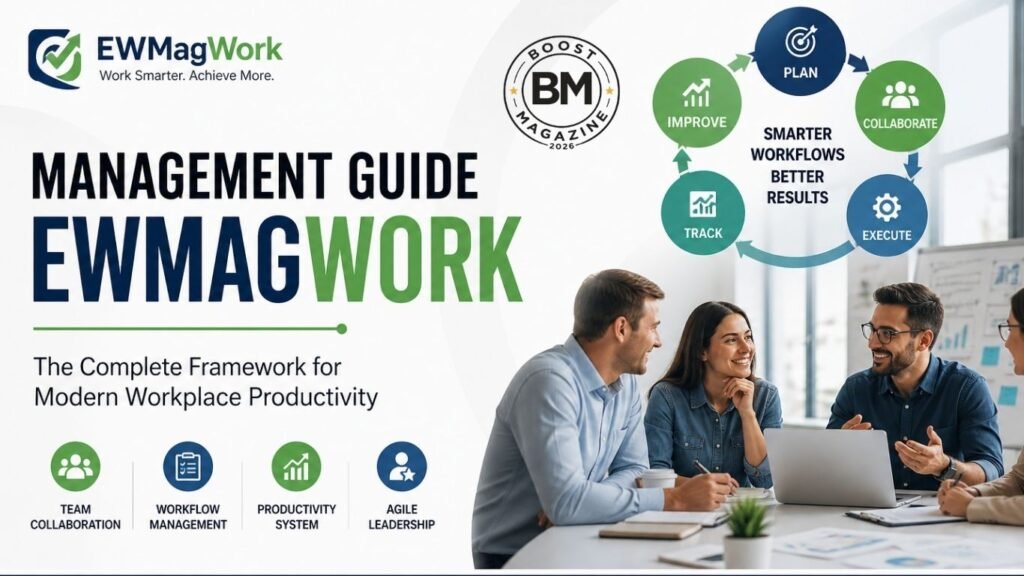

Modern organizations are under constant pressure to improve efficiency, maintain employee engagement, and adapt to rapidly changing workplace expectations. Traditional management systems often struggle to balance productivity with employee well-being, especially in digital and remote work environments. This shift has created growing interest in smarter management frameworks that combine workflow optimization, agile leadership, and human-centered operational strategies. One emerging approach gaining attention is the Management Guide EWMagWork framework.
The EWMagWork management guide is designed to help organizations improve workplace productivity through structured workflows, better communication systems, and performance-focused leadership strategies. Unlike rigid management models that prioritize output at the expense of collaboration and sustainability, EWMagWork promotes a balanced system that aligns operational efficiency with employee engagement. Businesses that implement modern workflow management strategies are increasingly recognizing that productivity is not only about speed but also about clarity, coordination, accountability, and adaptability.
Whether you manage a startup team, oversee enterprise operations, or coordinate remote employees across multiple departments, the EWMagWork productivity system offers a scalable framework for improving team performance. By integrating agile workflows, task management systems, collaboration tools, and leadership principles, organizations can build a more efficient and resilient workplace culture. This guide explains how the framework works, why it matters in today’s business environment, and how teams can implement it successfully.
What is the Management Guide EWMagWork?
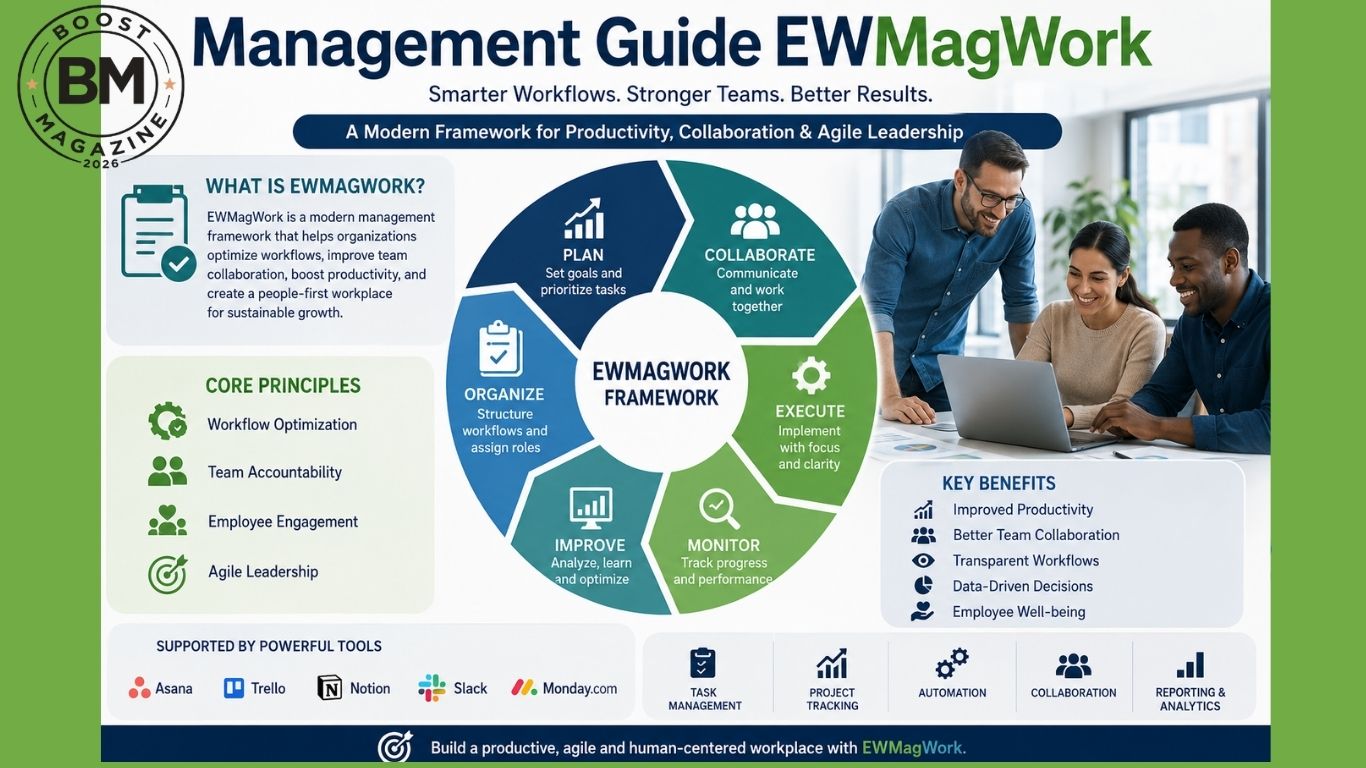
Management Guide EWMagWork is a modern workplace management framework focused on workflow optimization, employee productivity, agile leadership, and team collaboration. It helps organizations improve operational efficiency using structured task management systems, communication strategies, and productivity-focused workflows.
The core purpose of workplace management, EWMagWork, is to create a sustainable productivity framework that supports both organizational goals and employee well-being. In many businesses, productivity challenges are caused not by lack of effort but by poor coordination, unclear responsibilities, inefficient workflows, and communication breakdowns. EWMagWork addresses these issues through a management structure that emphasizes visibility, accountability, and collaboration.
At its foundation, the EWMagWork management framework combines several important workplace concepts. It integrates agile workflows for adaptability, project workflow management for operational structure, and human-centered leadership for long-term employee engagement. Instead of treating teams as isolated departments, the framework encourages interconnected business workflows where communication and project coordination remain transparent across the organization.
One reason businesses are moving toward human-centered management systems is the increasing recognition that employee burnout directly impacts productivity. Organizations that focus only on output often experience higher turnover, lower morale, and declining innovation. EWMagWork encourages leaders to prioritize workplace communication, manageable workloads, and collaborative problem-solving. This creates a healthier digital workplace where employees feel more involved in decision-making and performance improvement.
The framework can be applied across multiple industries, including technology, healthcare, education, marketing, finance, and remote-first companies. Managers, team leaders, startup founders, and operations specialists can all benefit from using the EWMagWork productivity system because it provides a structured yet flexible approach to workplace management.
Core Principles Behind the EWMagWork Productivity System
The EWMagWork productivity system is built around several foundational principles that help organizations create efficient, adaptable, and collaborative work environments. These principles are not limited to task management alone. They influence leadership strategy, workflow design, employee engagement, and operational efficiency across the entire organization.
One of the most important principles is workflow optimization. Many companies lose productivity because employees spend too much time navigating unclear processes or repetitive administrative tasks. EWMagWork workflow management encourages businesses to simplify operational structures by mapping workflows clearly, reducing unnecessary approvals, and improving task prioritization. Agile workflows allow teams to respond faster to changing priorities without disrupting long-term objectives.
Another core principle is team accountability and performance tracking. Successful organizations rely on transparency, and EWMagWork emphasizes visibility across projects and responsibilities. Managers use management dashboards, key performance indicators, and progress-tracking systems to ensure that every team member understands their role within the broader workflow. This creates operational efficiency while reducing confusion and duplicated effort. Employees are more likely to remain engaged when expectations and goals are clearly defined.
Employee engagement is another critical part of the EWMagWork leadership guide. Modern workplaces are increasingly collaborative, making communication systems essential for long-term success. The framework promotes open workplace communication, regular feedback cycles, and collaborative decision-making processes. Instead of relying entirely on top-down leadership structures, EWMagWork encourages managers to involve employees in workflow improvements and strategic planning discussions. This strengthens team collaboration and improves morale.
Leadership strategy within EWMagWork also differs from traditional management systems. Agile management EWMagWork principles prioritize adaptability, emotional intelligence, and continuous improvement over rigid control systems. Leaders are expected to support innovation, encourage accountability, and create an environment where employees can perform effectively without unnecessary micromanagement. This human-centered management system helps businesses maintain productivity while supporting employee well-being.
Organizations implementing these principles often experience better project coordination, stronger workplace communication, and more sustainable productivity systems. The framework works particularly well in businesses undergoing digital transformation because it combines operational discipline with flexible workflow management practices.
How EWMagWork Improves Workplace Productivity
One of the biggest advantages of the EWMagWork productivity framework explained in modern workplaces is its ability to improve productivity without increasing employee stress. Many organizations attempt to boost output by demanding longer hours or increasing workloads, but this approach usually creates inefficiencies over time. EWMagWork focuses on smarter workflows, better communication, and stronger coordination systems instead.
The framework improves workplace productivity by streamlining business workflow and project coordination. Teams often struggle when projects move between departments without clear visibility or ownership. EWMagWork introduces structured workflow systems where tasks, deadlines, responsibilities, and communication channels remain centralized. Employees spend less time searching for information or waiting for approvals, which allows projects to move more efficiently.
Another important factor is workflow automation. Businesses lose valuable time on repetitive tasks such as manual reporting, status updates, and document management. EWMagWork workflow automation guide principles encourage organizations to automate repetitive processes whenever possible. Automation improves accuracy, reduces delays, and allows employees to focus on strategic and creative work rather than administrative tasks.
Team collaboration also improves significantly under the framework. In many organizations, departments operate independently, leading to communication gaps and duplicated effort. EWMagWork team collaboration strategy promotes cross-functional visibility and collaborative planning. When teams understand how their work contributes to larger organizational goals, coordination becomes more effective and productivity naturally increases.
Remote work management is another area where the framework provides measurable benefits. Distributed teams often struggle with communication delays, unclear expectations, and inconsistent workflows. EWMagWork for remote teams emphasizes digital workplace management systems that centralize communication, project tracking, and performance monitoring. This creates greater alignment between remote employees and leadership teams.
EWMagWork improves productivity by:
- Streamlining workflows
- Enhancing team accountability
- Reducing communication delays
- Supporting agile workflows
- Improving project coordination
- Automating repetitive tasks
Organizations that adopt these systems typically experience improved operational efficiency, faster project delivery, stronger employee engagement, and reduced workflow bottlenecks.
Step-by-Step EWMagWork Setup Guide for Beginners
For beginners, implementing the EWMagWork management guide may initially seem complex, but the framework becomes manageable when approached systematically. The goal is not to redesign every process immediately but to gradually create a more organized and productive workplace structure.
The first step involves setting up a management dashboard. This dashboard acts as the central hub for workflow visibility, project coordination, and team accountability. Managers should create a system where tasks, deadlines, team assignments, and progress updates can be tracked in real time. Digital workplace management tools such as Asana, Trello, or Monday.com are commonly used to support this process. A clear dashboard reduces confusion and improves communication across departments.
The next step is defining team roles and accountability structures. Many workflow problems occur because employees are uncertain about ownership and expectations. EWMagWork encourages managers to establish clear responsibilities for every project stage. Each team member should understand their tasks, reporting structure, and contribution to broader organizational goals. This creates stronger accountability while improving team workflow optimization.
After establishing accountability, businesses should create agile workflows for daily operations. Agile workflows are designed to improve flexibility and responsiveness without sacrificing structure. Instead of relying on lengthy approval chains, teams operate through shorter feedback cycles and continuous progress reviews. This approach allows organizations to adapt quickly to new priorities while maintaining productivity.
Task management and performance tracking are also essential. Managers should implement systems that monitor workload distribution, task completion rates, and workflow bottlenecks. Effective performance tracking is not about surveillance but about identifying operational inefficiencies early. When managers can see where delays occur, they can make adjustments before problems escalate.
Weekly review systems play an important role in long-term optimization. Teams should regularly evaluate workflow performance, communication quality, and operational challenges. These meetings create opportunities for continuous improvement while reinforcing workplace communication and employee engagement. Over time, businesses can refine their workflows and build more sustainable productivity systems.
Managers who use EWMagWork daily often report that the framework creates greater visibility, stronger coordination, and improved employee ownership. Instead of reactive management, leaders can focus on strategic decision-making and long-term productivity improvement.
EWMagWork Workflow Management Best Practices
Successful implementation of the management framework EWMagWork depends heavily on consistency and optimization. While the framework provides structure, organizations must adapt it to their specific operational needs and workplace culture.
One of the best practices in EWMagWork management is building sustainable productivity systems rather than short-term performance spikes. Businesses should avoid overloading employees with excessive tasks or unrealistic deadlines. Sustainable productivity comes from balanced workloads, clear communication, and efficient workflow design. Teams perform better when processes remain predictable and manageable.
Another important practice involves improving team workflow optimization techniques. Managers should regularly review workflows to identify delays, redundancies, and communication gaps. Small operational improvements can significantly enhance organizational efficiency over time. For example, simplifying approval systems or centralizing project documentation can reduce delays across multiple departments.
Workplace communication strategies also require continuous attention. Poor communication remains one of the most common causes of workflow inefficiency. EWMagWork communication strategy principles encourage businesses to establish structured communication channels while avoiding unnecessary meetings and information overload. Teams should know where updates are shared, how feedback is delivered, and which communication tools support different workflows.
Organizations should also avoid common workflow management mistakes. Overcomplicated systems often create more problems than they solve. Businesses sometimes introduce too many productivity tools, approval processes, or reporting requirements, which increases operational friction. EWMagWork promotes simplicity, clarity, and adaptability rather than excessive administrative control.
EWMagWork for Remote Teams and Digital Workplaces
The rise of remote and hybrid work environments has transformed how organizations manage productivity and collaboration. Traditional management methods that rely heavily on physical supervision are no longer effective in distributed workplaces. EWMagWork for remote teams provides a structured solution for managing communication, accountability, and workflow visibility in digital environments.
Remote team collaboration strategies are central to the framework. Teams working across multiple locations require systems that support transparency and coordination without constant meetings. EWMagWork encourages organizations to use centralized project management platforms where employees can track progress, share updates, and collaborate asynchronously. This improves workflow continuity while reducing communication delays.
Digital workplace management best practices also focus on balancing flexibility with accountability. Remote employees need autonomy to manage their schedules effectively, but organizations still require consistent operational standards. EWMagWork creates accountability through measurable outcomes rather than excessive monitoring. Managers evaluate performance based on completed objectives, collaboration quality, and workflow contribution instead of activity tracking alone.
Communication systems for hybrid teams are another critical factor. Inconsistent communication often creates disconnects between remote and in-office employees. EWMagWork communication strategy principles encourage businesses to standardize communication platforms and meeting structures. Teams that use shared communication channels, collaborative documentation, and regular workflow reviews tend to maintain stronger alignment.
Employee well-being is especially important in remote environments. Isolation, unclear expectations, and blurred work-life boundaries can negatively affect productivity. EWMagWork emphasizes human-centered management practices that support employee engagement and mental well-being. Managers are encouraged to maintain regular check-ins, recognize employee contributions, and create realistic productivity expectations.
Essential EWMagWork Collaboration and Productivity Tools
Technology plays an important role in supporting the EWMagWork productivity system. While the framework itself focuses on management strategy and workflow design, the right tools help organizations implement these systems more effectively.
Project workflow management tools are essential for maintaining visibility across tasks, deadlines, and team responsibilities. Platforms like Asana and Monday.com help managers organize workflows, assign tasks, and monitor project progress in real time. These systems improve coordination while reducing communication confusion.
Task management platforms such as Trello support agile workflows by allowing teams to visualize project stages and priorities. Visual task boards make it easier for employees to understand workload distribution and project status. This improves operational efficiency and encourages accountability.
Collaboration software is equally important. Slack helps teams maintain consistent workplace communication through centralized messaging channels and integrations. Communication platforms become especially valuable for remote teams that rely heavily on digital coordination.
Knowledge management tools such as Notion support documentation, workflow standardization, and collaborative planning. Businesses that centralize documentation often reduce onboarding time, improve communication consistency, and maintain stronger operational structures.
The key is not using every available tool but selecting systems that align with organizational workflows and management objectives.
Common Challenges in EWMagWork Implementation
Despite its advantages, implementing EWMagWork workflow management can present challenges if organizations approach the framework incorrectly. One common issue is creating overly complicated workflow systems. Businesses sometimes attempt to optimize every process simultaneously, leading to excessive administrative layers and reduced flexibility.
Poor team accountability structures can also create implementation difficulties. If employees are unclear about responsibilities or performance expectations, workflow visibility alone will not improve productivity. Managers must establish clear accountability systems while maintaining collaborative workplace communication.
Communication gaps are another major challenge. Even well-designed workflows can fail when information is inconsistent or delayed. Organizations implementing EWMagWork should prioritize communication clarity and establish standardized collaboration processes early in the transition.
Some leaders also resist agile leadership approaches because they are accustomed to traditional management systems based on strict supervision and hierarchical decision-making. EWMagWork requires leaders to embrace adaptability, transparency, and employee empowerment. Businesses that successfully adopt these leadership principles often experience stronger innovation and long-term operational efficiency.
The Future of Agile Team Management With EWMagWork
The future of workplace management is increasingly connected to automation, artificial intelligence, and predictive workflow systems. Agile team management with EWMagWork is well-positioned to evolve alongside these trends because the framework already emphasizes adaptability, collaboration, and data-driven optimization.
AI-powered workflow optimization is expected to become a major component of future management systems. Organizations will increasingly use automation to analyze performance trends, identify workflow bottlenecks, and recommend operational improvements in real time. This will allow managers to focus more on leadership strategy and employee engagement rather than repetitive administrative tasks.
Data-driven leadership systems are also transforming workplace management. Modern organizations now have access to detailed performance analytics, communication insights, and operational metrics. EWMagWork management dashboards can evolve into predictive systems that help leaders make proactive decisions based on workflow patterns and productivity trends.
At the same time, human-centered workplace productivity trends will continue shaping management philosophy. Employees increasingly value flexibility, purpose, and well-being alongside career growth. Businesses that prioritize employee engagement, collaboration culture, and sustainable productivity systems will likely maintain stronger retention and performance outcomes.
The future workplace will require management systems that combine technology with human-centered leadership. EWMagWork provides a framework capable of supporting both operational efficiency and long-term organizational resilience.
Frequently Asked Questions About EWMagWork
What Is Management Guide EWMagWork?
Management Guide EWMagWork is a workplace productivity and workflow optimization framework designed to improve collaboration, leadership, project coordination, and employee engagement through agile management systems. It combines workflow management, performance tracking, and communication strategies to help organizations create more efficient and sustainable work environments.
How Does EWMagWork Improve Team Productivity?
EWMagWork improves productivity by streamlining workflows, improving communication, enhancing task accountability, and reducing operational inefficiencies. The framework helps organizations create structured project coordination systems that allow teams to work more efficiently without increasing unnecessary workload pressure.
Is EWMagWork Suitable for Remote Teams?
Yes, EWMagWork is highly effective for remote and hybrid teams because it emphasizes digital workplace management, workflow visibility, centralized communication, and measurable accountability systems. The framework supports collaboration across distributed teams while maintaining productivity and organizational alignment.
How Do Beginners Start Using EWMagWork?
Beginners should start by creating a management dashboard, defining team roles clearly, implementing task-tracking systems, and establishing workflow-review processes. Starting with smaller workflow improvements allows organizations to gradually build more efficient and scalable productivity systems.
What Industries Can Use EWMagWork?
EWMagWork can be applied across industries including technology, healthcare, education, marketing, finance, consulting, and remote-first businesses. Any organization seeking better workflow management, stronger collaboration, and improved workplace productivity can benefit from the framework.