


There are political journalists in Britain, and then there is Nigel Nelson. The distinction matters. Over a career stretching nearly four decades, Nelson built something most journalists never quite manage — a reputation that sits comfortably on both sides of the newspaper-television divide, respected by politicians who disagreed with him and by readers who trusted him. His name became shorthand for Westminster credibility long before he joined GB News as its Senior Political Commentator.
For anyone arriving late to the story, Nigel Nelson is the journalist who held the title of Fleet Street’s longest-serving political editor, a record that speaks not just to longevity but to the kind of consistent, trusted output that keeps a reporter relevant across multiple governments and generations. From Margaret Thatcher to today’s political landscape, he has watched and written through it all — a living archive of British political life.
This biography pulls together the verified details of who Nigel Nelson is, where he came from, who he married, and what made him one of the most recognizable names in British political journalism. Whether you know him from GB News, the Sunday Mirror, or the Sunday People, the full picture is worth understanding.
Who Is Nigel Nelson?
Nigel Nelson is a British journalist and political commentator with more than 36 years of experience covering UK politics. He is best known today as the Senior Political Commentator at GB News, the British television news network, where he provides analysis and commentary on government policy, parliamentary affairs, and the wider political landscape. Before his television career took centre stage, he was arguably the most prominent political editor working in British national newspapers.
His reputation was built largely through his long tenure at the Sunday Mirror and the Sunday People, where he served as Political Editor and became the longest-serving national newspaper political editor in Britain — a record that has not been surpassed. That kind of institutional staying power is rare in any industry, but particularly in journalism, where editorial churn is constant and political access depends heavily on personal relationships built over years.
What makes Nelson stand out is not simply the length of his career but what he did with it. He covered every British Prime Minister from Margaret Thatcher onwards, developed deep contacts within Westminster, and earned a reputation for clear, accessible political writing that neither patronized its readers nor oversimplified the issues. That combination — depth without obscurity — is what serious political journalism is supposed to look like.
Nigel Nelson’s Early Life, Birthplace and Background
Nigel Nelson was born and raised in the United Kingdom, though the specific town of his birth has not been publicly disclosed in official sources. Like many journalists of his generation, he has kept certain personal details away from the spotlight, preferring to let his professional record speak for itself. What is clear from the arc of his career is that he developed a strong interest in politics and current affairs from a young age, an interest that shaped the direction his life would take.
His family background is similarly guarded. Some sources have noted that his father’s name is George Nelson and his mother’s name is Emily Johanna Alexandra Nelson, though Nigel has not spoken extensively about his parents or childhood in public interviews. He appears to have no siblings mentioned in any verified public record, though this too has not been formally confirmed. The deliberate privacy around his early life suggests someone who made a conscious decision early on to keep his personal world separate from his professional one.
What we do know is that his upbringing instilled in him the values that would later define his journalism — discipline, a seriousness about factual accuracy, and a commitment to understanding the mechanics of political power. These are qualities you can trace directly in his work, from his earliest days in print through to his on-screen commentary at GB News.
Nigel Nelson Age and Date of Birth
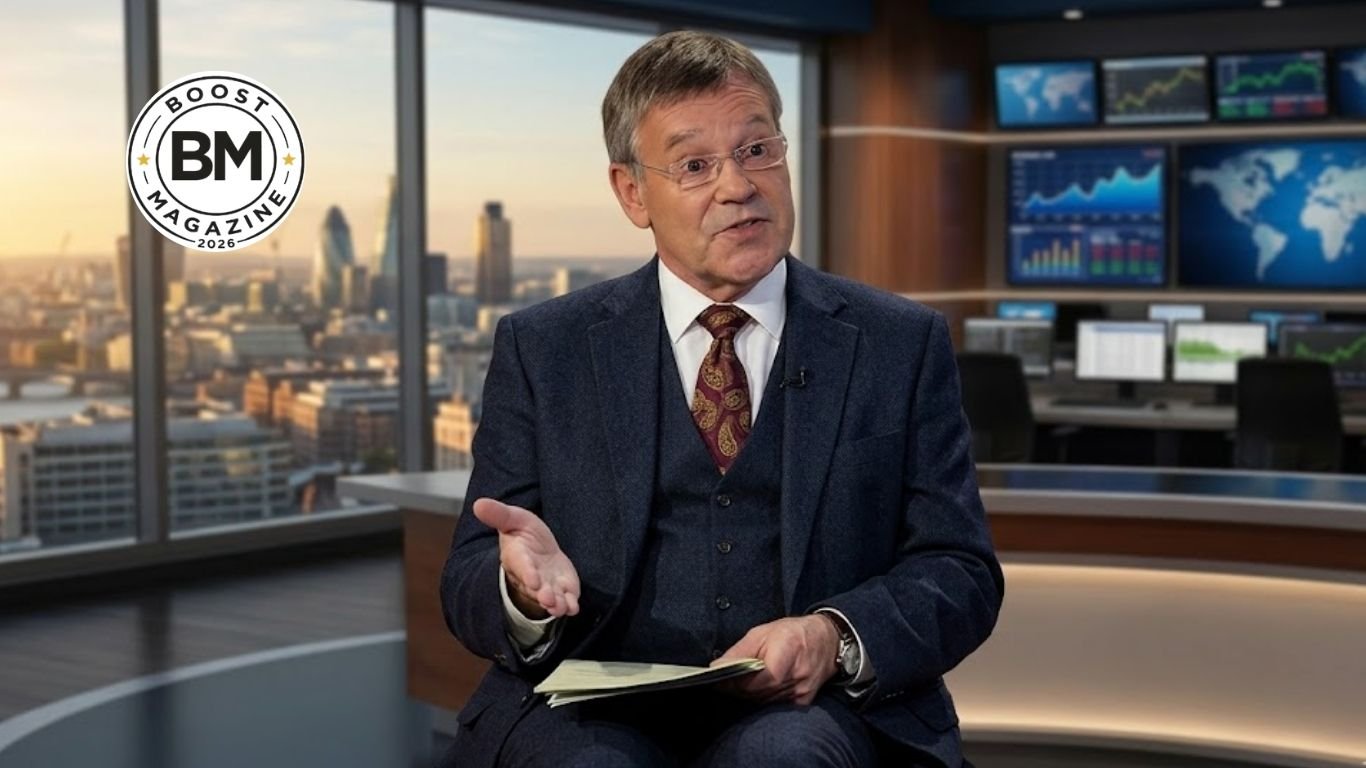
Nigel Nelson was born on May 12, 1965, making him 61 years old as of 2026. That date places him squarely in a generation of journalists who entered the profession before the internet transformed how news was gathered and distributed, and who had to adapt to entirely new media environments over the course of their careers. The fact that he has done so successfully — moving from print to television commentary while retaining his authority — says something meaningful about his adaptability.
His age also helps contextualize the breadth of his political experience. Starting his career at the Sunday Mirror in 1986, he was in his early twenties when he began covering Westminster politics. By the time he left that role in March 2023 after nearly 37 years, he had accumulated a depth of institutional knowledge that few working journalists could match. Every budget, every leadership crisis, every election — he was there, filing copy.
At 61, Nelson is still an active and visible presence in British media through his GB News role. His longevity in what is a physically and professionally demanding industry reflects both his personal commitment to journalism and the kind of institutional credibility that keeps experienced voices relevant even as the media landscape around them shifts dramatically.
Education and Path Into Journalism
Details of Nigel Nelson’s formal education have not been publicly confirmed through verified sources. He has not spoken extensively in interviews about his university background or the specific route that led him into journalism. What is clear is that the path took him to Fleet Street at a time when print journalism still dominated the news landscape, and political editors held considerable power and influence within the Westminster ecosystem.
The most revealing indicator of his early talent comes from a somewhat charming biographical footnote: he was runner-up in the National Schools Debating Competition. It is a small detail, but a meaningful one. It suggests someone who had an early aptitude for argument, rhetoric, and the structured examination of opposing viewpoints — precisely the skills that a political journalist needs to make sense of competing narratives in Westminster. Debate teaches you how to listen as much as how to speak, which is arguably the more valuable skill in reporting.
His path into journalism followed the traditional route of building credibility through political coverage, where contact networks and source relationships matter as much as writing ability. By the time he secured his role as Political Editor at the Sunday Mirror in 1986, he had already established himself as someone trusted enough to carry one of the most prestigious titles in British newspaper journalism. The education, wherever it happened, clearly worked.
A Career Timeline of Nigel Nelson’s Journalism Work
Nigel Nelson’s journalism career officially began in earnest when he took on the role of Political Editor at the Sunday Mirror in 1986. From that starting point, he would go on to hold the position across both the Sunday Mirror and Sunday People under the Trinity Mirror plc umbrella, becoming the longest-serving national newspaper political editor in Britain — a title that remained his for the better part of four decades. The sheer consistency of that record is almost without parallel in British political media.
During his long print career, Nelson covered every major political event in British life. He interviewed Prime Ministers, was present for leadership coups and policy catastrophes, and developed the kind of Westminster contacts that only come from decades of respectful, reliable reporting. He personally knew every Prime Minister from Margaret Thatcher onwards — a claim that a very small number of working journalists can make honestly. In March 2023, he left his role as political editor, bringing to an end one of the longest unbroken stints in that position in Fleet Street history.
Outside his newspaper career, Nelson was also a regular presence on broadcast media. He appeared frequently on BBC News, Sky News, and ITV News as a political analyst, often called upon to provide context and expertise during fast-moving news events. He received a nomination for Political Journalist of the Year at the 2017 British Press Awards, one of the most prestigious recognitions in British journalism. That nomination underlined the respect his peers had for his work across a career already measured in decades.
Nigel Nelson’s Role in Political Reporting and Westminster Coverage
Political reporting at Westminster is a specialist discipline. It requires patience, access, discretion, and an ability to separate genuine significance from the noise that surrounds political life at close quarters. Nigel Nelson spent the better part of four decades doing exactly this, and the quality of his work reflects how seriously he took those demands. His commentary was consistently praised for being fair-minded — able to critique governments of different political complexions without appearing to carry a personal ideological agenda into the reporting.
He covered every Prime Minister from Thatcher through to the present day, which means he reported on some of the most consequential moments in modern British political history: the fall of Thatcher, the emergence of New Labour, the Iraq War debates, the Brexit referendum and its aftermath, multiple financial crises, and the turbulent years of shifting leadership that followed. Having a single journalist thread through all of those events with continuity creates a kind of institutional memory that is genuinely valuable.
His work also extended to interviews with prominent political and public figures beyond the parliamentary estate. He interviewed Tony Blair and David Cameron, among many others, and built a reputation for asking questions that were informed, direct, and difficult to deflect with political non-answers. That combination of access and rigor is what distinguished his political reporting from more superficial coverage and what built the lasting trust that underpins his authority as a commentator today.
Nigel Nelson and His Work With GB News
Nigel Nelson joined GB News as Senior Political Commentator following the end of his long career at the Sunday Mirror and Sunday People. The channel, which launched in 2021 as a news network with a distinctly opinionated format, brought Nelson in as a voice of established journalistic credibility — someone with deep roots in the parliamentary reporting tradition who could provide substantive political analysis for the network’s audience.
His role at GB News involves real-time commentary on political events, including parliamentary debates, policy announcements, government decisions, and the broader ideological battles that define British politics. He has written and appeared on issues ranging from Labour’s policy direction under Keir Starmer to the structural challenges facing the Conservative Party. His commentary is notable for being grounded in factual reporting rather than partisan cheerleading, which is partly what makes him an effective analyst in an environment that can sometimes trend towards commentary that prioritizes heat over light.
Alongside his television work, Nelson has continued to provide political commentary for the Sunday Mirror, maintaining a connection to the print world where his career began. That dual presence — writing for a major national newspaper while appearing on television — reflects his broader standing in British media. Few political journalists of his generation have remained this active across multiple platforms this deep into their careers, which speaks to the continued demand for his particular expertise.
Who Is Nigel Nelson Married To?
Nigel Nelson is married to Claire Pearsall, and the couple tied the knot in January 2020. The marriage brought together two people with deep roots in British political life — Nelson through his journalism career and Pearsall through her own substantial career in parliamentary affairs. Claire Pearsall celebrated their second wedding anniversary in January 2022, sharing a throwback photograph on social media to mark the occasion.
Claire Pearsall is not simply known as Nigel Nelson’s wife. She has a distinguished professional profile of her own. According to her LinkedIn profile, she has served as Chief of Staff at the House of Commons since October 2004, a position she has held for more than 15 years. She also worked as a Special Advisor (SpAd) at the UK Home Office for the Immigration Minister, and she has served as a Conservative Councillor for Sevenoaks District Council, representing the Ash and New Ash Green ward. She has appeared on Sky News in a professional capacity and has accumulated a significant record of parliamentary experience.
That background makes their marriage an interesting one in the context of British political life. A senior political journalist and a senior parliamentary official, both with decades of Westminster experience, share not just a personal life but a deep professional understanding of how British politics works. Nelson has occasionally referenced his wife in interviews, sometimes with warmth and a degree of humour about their differing political perspectives — a reflection of two people who know the political world well enough to hold views about it without letting it define their relationship.
Nigel Nelson’s Wife, Children and Family Life
Claire Pearsall and Nigel Nelson have kept their family life largely out of the public eye, which is a deliberate choice and one that is entirely understandable given their respective public profiles. Both are recognizable figures in their professional worlds, and both appear to have made a considered decision that their personal life — particularly where children are concerned — should remain private.
Whether the couple has children together has not been officially confirmed. Some online sources have named possible children, but none of these claims have been verified through official or confirmed public statements from either Nelson or Pearsall. It would be journalistically irresponsible to treat unconfirmed claims as established fact, and both individuals have given no public indication of wishing to discuss this aspect of their lives. Their desire for privacy in this area deserves respect.
What can be said with confidence is that Nigel Nelson has spoken about his wife in a way that reflects a stable and mutually supportive relationship. The couple shares intellectual interests, an understanding of the political world, and the kind of professional empathy that comes from both having worked in or around Westminster for a long time. The decision to keep family details private is, in many ways, consistent with how Nelson has approached his personal life throughout his career — with discretion, and with a clear boundary between the public journalist and the private person.
Is Nigel Nelson a Labour Supporter? Understanding His Political Position
This question comes up regularly, partly because Nelson spent most of his career at the Sunday Mirror and the Sunday People — newspapers that have traditionally been associated with centre-left, Labour-leaning readerships. That association has led some people to assume that Nelson himself must hold Labour sympathies. The reality is more nuanced, and it is worth addressing directly.
Nigel Nelson has never publicly affiliated himself with any political party. His career was built on political journalism, which requires the kind of neutrality and multi-directional critical thinking that makes overt partisanship professionally counterproductive. He has criticized governments of all political colours in his writing and commentary, and his analysis at GB News — a network not typically associated with Labour-friendly coverage — reflects a willingness to engage critically with both the left and the right of British politics.
His commentary on figures such as Keir Starmer has included both supportive analysis and pointed criticism, which is precisely what good political journalism looks like. Commentators with genuine access and experience do not cheerlead; they interrogate. Nelson’s political position, to the extent it can be assessed from his public work, is best described as analytically independent — someone who brings knowledge and experience to political events rather than a predetermined ideological conclusion. His wife’s role as a Conservative Councillor adds further complexity to any simple political labelling.
Nigel Nelson’s Net Worth and Professional Achievements
Estimating net worth for journalists is an inherently imprecise exercise, and Nigel Nelson has not publicly disclosed his financial details. What can be reasonably inferred is that nearly four decades as a senior political editor at major national newspapers, combined with regular television appearances and his current role at GB News, will have generated a comfortable and professionally rewarding career. Senior political editors at major British newspapers are among the better-compensated roles in print journalism, and broadcast commentary adds further to that picture.
His professional achievements are considerably easier to summarise. He was Fleet Street’s longest-serving political editor, a record in its own right. He was nominated for Political Journalist of the Year at the 2017 British Press Awards, one of the most significant peer recognitions available in British journalism. He built personal relationships with every British Prime Minister from Margaret Thatcher onwards — a unique vantage point on modern British political history. And he successfully transitioned from print to broadcast commentary without losing the credibility he had built in newspapers.
Beyond the titles and nominations, Nelson’s most enduring achievement may be simpler: he built a career based on accuracy, accessibility, and analytical independence, and he did it consistently over nearly 40 years. In a profession where cynicism is easily earned and trust is easily lost, that kind of sustained credibility is genuinely rare. His reputation as a trustworthy, well-sourced, fair-minded political journalist remains intact, which is perhaps the most meaningful professional achievement a journalist can point to.
Frequently Asked Questions About Nigel Nelson
Who is Nigel Nelson?
Nigel Nelson is a British political journalist and Senior Political Commentator at GB News. He is best known for his nearly four-decade career as political editor at the Sunday Mirror and Sunday People, where he became Fleet Street’s longest-serving national newspaper political editor.
How old is Nigel Nelson?
Nigel Nelson was born on May 12, 1965, making him 61 years old as of 2026.
Who is Nigel Nelson married to?
Nigel Nelson is married to Claire Pearsall. The couple married in January 2020.
Who is Claire Pearsall?
Claire Pearsall is a political professional with extensive parliamentary experience. She has served as Chief of Staff at the House of Commons since October 2004, previously worked as a Special Advisor at the UK Home Office, and is a Conservative Councillor for Sevenoaks District Council. She has also appeared on Sky News.
Does Nigel Nelson have children?
Neither Nigel Nelson nor Claire Pearsall has publicly confirmed details about children. This aspect of their personal life has been deliberately kept private.
What is Nigel Nelson known for?
He is known for being Fleet Street’s longest-serving national newspaper political editor, for his knowledge of Westminster politics spanning multiple Prime Ministers, and for his role as Senior Political Commentator at GB News.
What does Nigel Nelson do at GB News?
He provides political commentary and analysis on current political events, government policies, and parliamentary affairs as the network’s Senior Political Commentator.
Is Nigel Nelson affiliated with a political party?
No. Nigel Nelson has never publicly affiliated himself with any political party and built his career on editorially independent political journalism.
What is Nigel Nelson’s net worth?
Nigel Nelson’s net worth has not been publicly disclosed. Any specific figure circulating online should be treated as an estimate rather than confirmed fact.
When did Nigel Nelson leave the Sunday Mirror?
He left his role as political editor at the Sunday Mirror and Sunday People in March 2023, after holding the position since 1986.
Conclusion
Nigel Nelson’s story is, at its core, a story about staying power — the kind that comes not from self-promotion but from repeatedly doing difficult work well over a long period of time. His career in British political journalism has spanned governments, recessions, constitutional crises, and the near-total transformation of the media industry, and he has remained a credible and sought-after voice throughout all of it. That is not an accident; it is the product of the kind of disciplined, principled journalism that builds genuine trust with audiences.
For anyone trying to understand the landscape of British political media, Nigel Nelson is one of its most instructive figures. He represents a tradition of Westminster reporting that takes its responsibilities seriously — to be accurate, to be fair, to be informed, and to be accessible to general readers without sacrificing the depth that complex political events require.
If you want to keep up with Nigel Nelson’s ongoing commentary and analysis, following his work at GB News and his continuing contributions to the Sunday Mirror is the most reliable way to stay current with one of Britain’s most experienced political voices.