
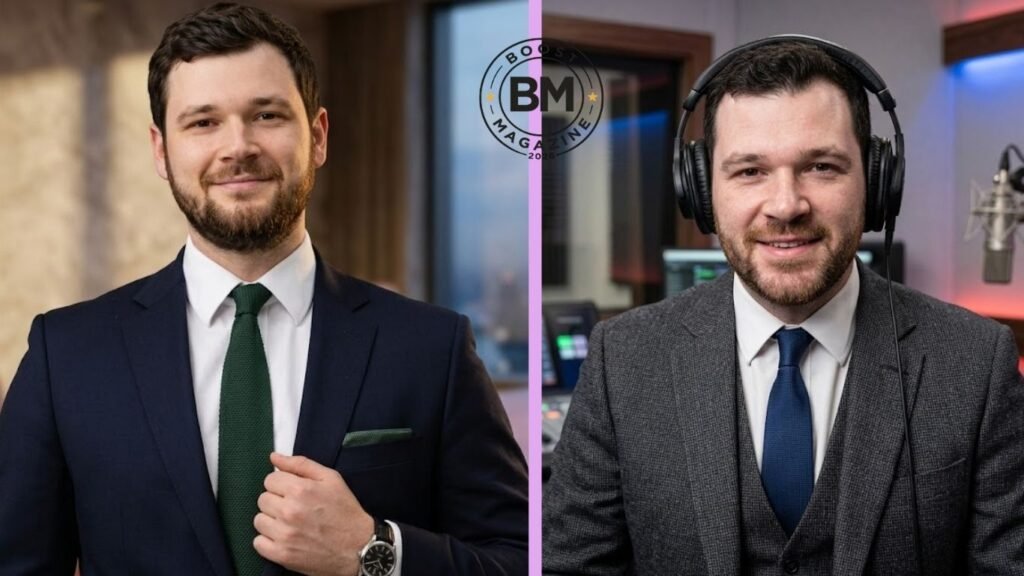

Henry Zeffman is one of the most prominent political journalists working in British broadcasting today. As BBC News’s Chief Political Correspondent, he has become a familiar and trusted presence on some of the corporation’s most-watched programmes. Yet despite his visibility on screen and across social media, many people searching for his background find basic details surprisingly hard to pin down — particularly his age. This article brings together the verified facts, addresses what remains uncertain, and provides a complete picture of his career, education, and public life.
For anyone arriving here with a simple question, here is the short answer: based on confirmed career timelines, Henry Zeffman was born in the early to mid-1990s and is currently in his early 30s. The most reliable estimate, grounded in the fact that he was reported to be 21 years old when he won a major journalism award in August 2015, places his birth year around 1993 or 1994. That detail matters not just as a biographical note, but as a reflection of how quickly he has risen through a competitive industry.
What follows is a thorough guide covering everything from his school years in North London to his appointment at the BBC, his journalism awards, his family background, and the reasons why certain details about his private life remain out of the public domain.
Who Is Henry Zeffman?
Henry Zeffman is a British political journalist who currently holds the position of Chief Political Correspondent at BBC News, a role he has occupied since 2023. He is known across the industry for his measured on-air style, his command of Westminster detail, and his ability to translate complex political developments into clear, accessible reporting. Audiences encounter him regularly on flagship programmes including BBC Breakfast, Newsnight, and the BBC News Channel.
Before moving to the BBC, he spent approximately seven years at The Times, one of Britain’s most respected broadsheet newspapers. During that period he worked across several senior roles, progressing from political reporter to Associate Political Editor and serving a stint as the paper’s Washington Correspondent. That posting took him to the United States during a particularly significant period in American politics, covering the closing months of the Trump administration and the Biden transition.
His professional reputation rests on a combination of rigorous sourcing, calm delivery, and consistent accuracy. In an era when political journalism is frequently accused of sensationalism, Zeffman has built his standing on the opposite qualities — careful language, contextual depth, and a willingness to explain rather than simply react. That approach has earned him respect among both peers and audiences.
Key Facts About Henry Zeffman at a Glance
| Detail | Information |
|---|---|
| Full Name | Henry Zeffman |
| Profession | Journalist, BBC Chief Political Correspondent |
| Estimated Age | Early 30s (born approx. 1993–1994) |
| Nationality | British |
| Education | Highgate School; PPE, Brasenose College, Oxford |
| Previous Employer | The Times |
| Current Employer | BBC News |
| Key Awards | Anthony Howard Award (2015); Young Journalist of the Year, National Press Awards (2019) |
| Sibling | Oliver Zeffman (conductor) |
How Old Is Henry Zeffman?
The clearest factual anchor for calculating Henry Zeffman’s age comes from a 2015 Press Gazette report confirming that he was 21 years old when he won the Anthony Howard Award for Young Journalists that August. Working from that reference, his birth year falls in 1993 or 1994, which means he is currently in his early 30s — most likely 31 or 32 as of 2026.
It is worth being transparent about what remains uncertain here. Henry Zeffman has never publicly confirmed his exact date of birth, and the BBC does not publish personal biographical details like birth dates for its journalists as a matter of standard practice. Several websites list different years — ranging from 1990 to 1995 — and those discrepancies reflect the absence of an official source rather than any deliberate mystery. The 2015 award reference is the most credible fixed point available and has been used here accordingly.
What the age question does illustrate, beyond the biographical curiosity, is the speed of his career progression. Becoming Chief Political Correspondent at the BBC while still in one’s early 30s is genuinely uncommon. It speaks to the strength of his reporting record and the recognition he earned through consistent work at The Times over nearly a decade before the BBC appointment.
Henry Zeffman’s Early Life and Education
Henry Zeffman grew up in North London, attending Highgate School — a well-regarded independent day school with a long tradition of producing writers, academics, and public figures. The school’s emphasis on academic rigour and independent thinking appears to have aligned well with the trajectory he later followed. Details about his family home life remain private, though his family background is reported to be culturally Jewish, and his household appears to have placed a strong emphasis on education and public affairs.
From Highgate, he went on to read Philosophy, Politics, and Economics — the PPE degree — at Brasenose College, Oxford. PPE is, of course, the course most closely associated with British political life; its graduates fill the benches of Parliament, the offices of think tanks, the columns of national newspapers, and the studios of broadcasters. At Brasenose, Zeffman was academically engaged but also took on leadership responsibilities, serving as President of the Junior Common Room in 2014. He also pursued music alongside his studies, reportedly acting as a junior organ scholar and playing the chapel organ — a detail that adds some texture to a biography that is otherwise predominantly defined by politics and journalism.
The Oxford years clearly shaped his professional direction. His student engagement with politics, his involvement in governance through the JCR, and his early journalism work all pointed toward the career that followed. He graduated into a media landscape that was already in the midst of significant change, and his timing — coupled with the platform provided by the Anthony Howard Award — meant he entered professional journalism with immediate momentum.
From Oxford to a Career in Political Journalism
The pivotal moment in Henry Zeffman’s early career came before he had even graduated. In 2015, still an Oxford student, he entered the Anthony Howard Award for Young Journalists — one of the most prestigious prizes available to emerging political writers in Britain. The award, established in memory of journalist and broadcaster Anthony Howard and sponsored by Haymarket Media Group, carried a prize of £25,000 along with successive fellowships at The Times, The Observer, and the New Statesman.
Zeffman won by submitting a 5,000-word essay examining the political experiences of Members of Parliament who had lost their seats at elections. The topic was thoughtful, the research was evidently thorough, and the judges’ decision gave him an almost immediate entry point into serious political journalism. His own reaction at the time was characteristically understated: he spoke about the excitement of working on three influential publications and described the political moment as particularly compelling for a young journalist to be entering the profession.
The award mattered in practical terms — the fellowships placed him inside major newsrooms at exactly the right career stage — but it also mattered as a signal. Winning a competitive national prize while still a student establishes credibility in ways that take many journalists years to build. That credibility became the foundation on which the next decade of his career was constructed.
Henry Zeffman’s Journey at The Times
Henry Zeffman joined The Times formally as a political reporter in 2016, shortly after completing the fellowship period that followed his Anthony Howard Award win. The transition into full-time employment at one of Britain’s most storied newspapers was a natural progression, and his work there quickly distinguished itself. Westminster politics during this period was anything but quiet — the Brexit referendum had reshaped British political life entirely, and the years that followed saw extraordinary levels of parliamentary drama, leadership contests, and policy disruption.
At The Times he progressed steadily through the ranks. He covered major political stories across several years of significant upheaval, demonstrating the kind of reliability and analytical depth that earns a journalist senior status. His role as Washington Correspondent between approximately 2020 and 2021 broadened his experience considerably, adding international reporting to a profile that had previously been focused on domestic politics. Covering the final stretch of the Trump presidency and the transition to the Biden administration was a formative assignment that placed him at the centre of globally significant stories.
By the time he left The Times, he had spent around seven years at the publication and had held the title of Associate Political Editor. That career arc — from junior reporter to associate editor at one of Britain’s leading national newspapers — represents exactly the kind of sustained, credible progression that tends to attract the attention of broadcasters. His move to the BBC in 2023 was, in retrospect, a logical next step for someone whose skills had been well-tested across both print and broadcast formats.
His Role as BBC Chief Political Correspondent
Henry Zeffman was appointed Chief Political Correspondent at BBC News in 2023, taking on one of the most high-profile roles in British broadcast journalism. The position places him at the intersection of daily news events and longer-form political analysis, requiring both the speed to respond to breaking developments and the depth to contextualise them for a general audience. It is a demanding brief, and his background — combining Oxford PPE, seven years at The Times, and experience reporting from Washington — prepared him well for it.
In the role, he appears regularly across a wide range of BBC platforms. His analysis features on Newsnight, BBC Breakfast, the Today programme on Radio 4, and the BBC News Channel. He covers Downing Street, the House of Commons, party conferences, and election campaigns with the same measured authority that characterised his newspaper work. His Twitter presence, primarily professional in tone, has grown substantially and reflects the reach that comes with regular BBC appearances.
What makes Zeffman effective in the role is a quality that sounds straightforward but is genuinely difficult to maintain: he explains things clearly without simplifying them unfairly. Westminster politics involves layers of procedure, precedent, and personality that can defeat even experienced reporters. His ability to navigate those layers while still communicating meaningfully to audiences with no particular political background has made him a valuable editorial asset for the BBC and a trusted source for viewers.
Awards, Achievements, and Professional Recognition
Henry Zeffman’s career has been marked by formal recognition at two distinct points: once near its beginning and once during its growth phase. The first, the Anthony Howard Award for Young Journalists in 2015, has already been discussed in detail. The second is the Young Journalist of the Year award at the National Press Awards in 2019 — a recognition that came four years into his time at The Times and confirmed that the early promise he had shown as a student had translated into sustained professional excellence.
The National Press Awards are among the most respected industry honours in British journalism, covering both print and digital media. Being recognised as Young Journalist of the Year in a highly competitive field, at a relatively early career stage, is a meaningful achievement. It confirmed Zeffman’s standing not just as a promising newcomer but as a working journalist producing consistently high-quality output. The combination of those two awards — one for potential, one for delivery — maps neatly onto the career trajectory he has since maintained.
Beyond formal prizes, his professional recognition extends to the roles he has been trusted with. The Washington Correspondent posting, the Associate Political Editor title at The Times, and the BBC Chief Political Correspondent appointment are all markers of peer and editorial confidence. In a profession where advancement is often slow and institutional trust takes years to build, Zeffman’s rise has been notably efficient — a reflection of both natural ability and the disciplined work ethic that his colleagues and editors have consistently acknowledged.
Henry Zeffman’s Family and Personal Background
Henry Zeffman has a brother, Oliver Zeffman, who is a classical music conductor and has built a notable career in that field. The two siblings appear to have been raised in a household where both intellectual and creative pursuits were valued. A further family connection worth noting is to the concert pianist Solomon Cutner — a historical figure in classical music — who is reported to be a relative. He also has a sister who studied law, though she remains entirely out of the public eye.
His family background is reported to be culturally Jewish, a detail that has been mentioned in various profile articles, though Zeffman himself does not discuss religious identity publicly. His father has been identified in some reports as a corporate financier, though details about his parents more broadly are not something he has chosen to make public. The household he grew up in appears to have been academically oriented and professionally ambitious, which aligns with the educational path he and his siblings followed.
What is perhaps most notable about his family background is the breadth of fields represented across his immediate family — politics and journalism, classical music and conducting, law. Whether that reflects deliberate variety or simply individual inclination, it suggests an environment where multiple intellectual pathways were taken seriously. For Zeffman himself, the political direction was clearly established early, though the musical side of his Oxford years suggests his interests were never entirely narrowly defined.
Why Information About His Private Life Is Limited
Henry Zeffman keeps his personal life substantially out of public view, and that is a deliberate choice rather than an oversight. He is believed to be married, though the identity of his partner has never been publicly confirmed, and no information about children has entered the public domain. His social media presence, primarily on Twitter, is almost entirely professional — focused on his reporting, links to his work, and commentary on political events. There is nothing unusual about this approach; it is a choice many journalists make, particularly those who work in politically charged environments where public visibility can attract unwanted scrutiny.
It is also worth understanding the structural context. The BBC, as a public broadcaster, does not publish personal biographical information for its journalists in the way that celebrity management teams might. Zeffman’s public profile is built on his professional work, and that is the lens through which he is primarily visible. Websites that list highly specific personal details — exact birth dates, marital history, net worth figures — should be read with caution, as much of that information is speculative rather than sourced from anything official.
The absence of personal detail should not be mistaken for evasiveness. In an era where media personalities are often expected to share significant portions of their private lives, the decision to draw a clear line between professional and personal is both legitimate and, arguably, consistent with the kind of journalistic restraint that has characterised his reporting. The substance of his public presence is his work, and by that measure, there is a great deal to engage with.
Frequently Asked Questions About Henry Zeffman
How old is Henry Zeffman? Based on confirmed reports placing him at 21 years old in August 2015, Henry Zeffman is most likely in his early 30s — approximately 31 or 32 as of 2026. His exact birth date has not been officially confirmed.
Where did Henry Zeffman study? He attended Highgate School in North London before reading PPE at Brasenose College, Oxford, where he was JCR President in 2014.
What is Henry Zeffman’s BBC role? He serves as Chief Political Correspondent at BBC News, a position he has held since 2023.
Did Henry Zeffman work for The Times? Yes. He spent approximately seven years at The Times in roles including political reporter, Washington Correspondent, and Associate Political Editor.
What awards has Henry Zeffman won? He won the Anthony Howard Award for Young Journalists in 2015 and Young Journalist of the Year at the National Press Awards in 2019.
Who is Oliver Zeffman? Oliver Zeffman is Henry’s brother and a professional classical music conductor.
Is Henry Zeffman married? He is believed to be married, but no details about his partner have been publicly confirmed.
What is Henry Zeffman’s nationality? He is British.
Final Thoughts on Henry Zeffman’s Career and Public Profile
Henry Zeffman’s career represents something genuinely unusual in contemporary British journalism: a clear, consistent upward trajectory driven by the quality of the work rather than the cultivation of personal celebrity. From winning a national award at 21 while still at Oxford, through seven rigorous years at The Times covering everything from Brexit to Washington, to a leading correspondent role at the BBC — the progression is logical, earned, and built on a foundation of sound editorial judgment and reliable reporting.
His relative youth in a prominent role at the BBC reflects well on both his ability and on the institution’s willingness to appoint on merit. The political correspondents who become genuinely trusted voices over the long term tend to be those who demonstrate early that they understand the difference between being heard and being right. Based on his track record, Zeffman appears to understand that distinction clearly.
For anyone who follows British political journalism or simply wants to understand who is explaining the news to them, Zeffman is a figure worth knowing about. His background, his awards, his career path, and his current role all point toward continued influence in the years ahead. Following his work through BBC News remains the most direct way to stay engaged with the political reporting that has defined his career so far.