
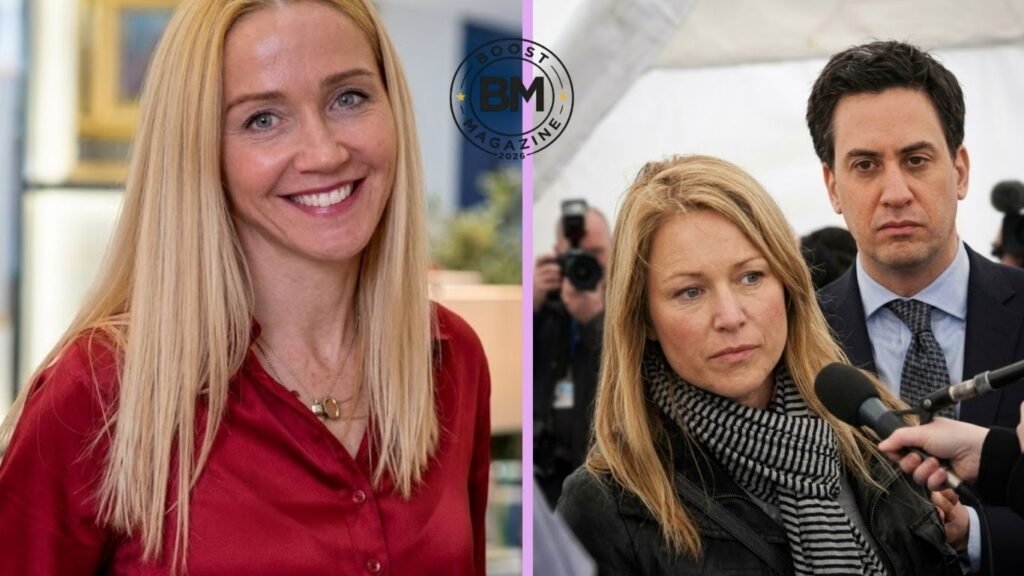

Most people who follow British politics will recognise the Kinnock name immediately. Neil Kinnock led the Labour Party through some of its most turbulent years. His wife, Glenys, became a respected baroness and European Commissioner. Their son Stephen sits in Parliament today. But there is another member of this remarkable family who has built a life largely away from the political spotlight — Rachel Kinnock, Neil and Glenys’s daughter, whose story is less widely told but every bit as interesting.
Rachel occupies an unusual position. She is part of one of the most recognisable families in modern British public life, yet she has chosen a path that does not place her centre stage in the way her relatives have. That choice itself says something. Growing up in a household shaped by politics, public service, and genuine conviction leaves a mark — and for Rachel, that mark appears to have translated into a career built around communication, advocacy, and meaningful work rather than elected office.
This profile brings together what is publicly known about Rachel Kinnock’s life, background, and career, drawing on verified sources and placing her story within the broader context of a family that has shaped Labour politics for more than four decades.
Who Is Rachel Kinnock?
Rachel Kinnock is the daughter of Neil Kinnock, the former leader of the Labour Party, and Glenys Kinnock, the late baroness and European Commissioner who was widely admired for her humanitarian work. She is also the sister of Stephen Kinnock, the Labour MP for Aberavon, who has become one of the party’s more prominent voices on trade and foreign policy. Rachel’s full name is Rachel Nerys Kinnock — the middle name Nerys being a nod to her Welsh heritage, a thread that runs through the entire family.
She belongs to a generation of political children who grew up watching their parents navigate life under intense public scrutiny. Neil Kinnock served as Labour leader from 1983 to 1992, a period that included two general election defeats but also the painful, necessary modernisation of the party that eventually made it electable again. Rachel would have been a child and then a teenager through most of that time, which means she experienced the full weight of being a Kinnock during the years when that name was both celebrated and, in certain quarters, relentlessly attacked.
Unlike her brother Stephen, Rachel has not pursued elected office. She has instead built a career in communications, public affairs, and advocacy — areas where her understanding of public life and media, shaped no doubt by her upbringing, would be a genuine asset. She is a private person by the standards of modern public figures, but her connections and her family background mean she remains a subject of real public interest.
Early Life and Family Background
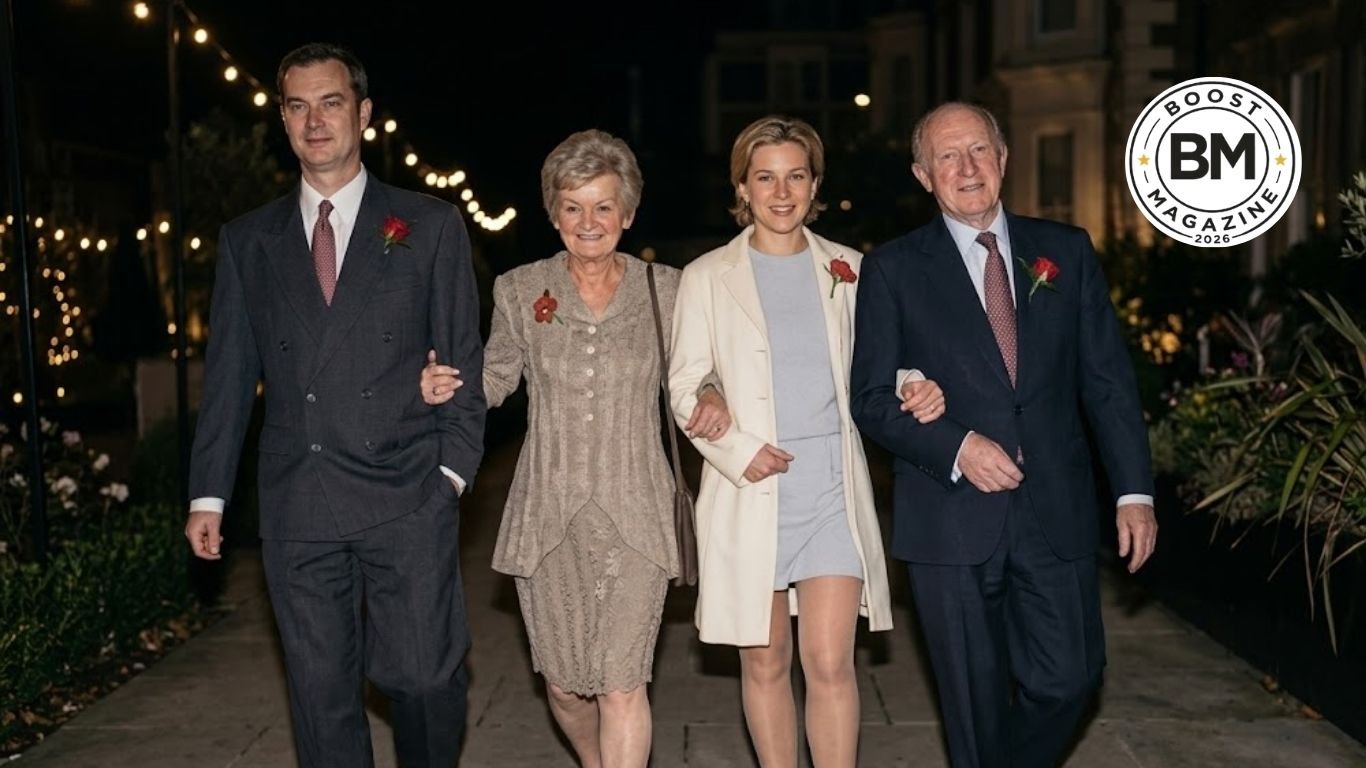
Rachel Kinnock was born in the 1970s and grew up primarily in South Wales and London, the two anchors of her family’s life. Neil Kinnock was the MP for Bedwellty (later Islwyn) in South Wales, a constituency he held for decades, and the family maintained deep roots there even as the demands of leading the Labour Party brought them frequently to London. Growing up between those two worlds — the close-knit working-class communities of the Welsh valleys and the often brutal theatre of Westminster — gave Rachel and her brother a grounding that few children of their generation shared.
The Kinnock household was, by all accounts, an intellectually lively one. Neil Kinnock is known for his passion for language, literature, and ideas, as well as his oratorical gifts. Glenys was equally engaged — she had trained as a teacher before becoming increasingly involved in development work and eventually entering the European Parliament. Family life was reportedly warm and close, even during the years when the political pressure on their father was immense. Neil Kinnock has spoken in interviews over the years about the importance of protecting his children from the worst of public life while being honest with them about what their family was experiencing.
Rachel’s Welsh identity appears to be genuinely important to her. The name Nerys — a traditional Welsh name meaning “lady” — is one small indication of that. The Kinnocks have always worn their Welshness with pride rather than as a political convenience, and Rachel is no different in that regard. That sense of identity, rooted in community and working values, is a consistent thread across the family.
Growing Up as the Daughter of Neil and Glenys Kinnock
There is something that deserves to be said plainly about what it means to grow up as the child of a party leader — particularly one who, like Neil Kinnock, was subjected to sustained and sometimes vicious media treatment. The infamous Sun front page on the morning of the 1992 general election, asking whether “the last person to leave Britain” would turn out the lights if Kinnock won, captures the atmosphere of the time. Rachel would have been a teenager then. That kind of sustained public hostility directed at a parent shapes a person.
What is notable is that neither Rachel nor Stephen appears to have been defined by bitterness about that period. Stephen has spoken publicly about it, acknowledging the difficulty while also crediting it with giving him a thick skin and a clear sense of what public service actually requires. Rachel’s public statements are fewer, but the same resilience seems to be part of her character. She has engaged with public life on her own terms, selectively and thoughtfully, rather than either retreating entirely or seeking the validation of public attention.
Glenys Kinnock’s influence on her daughter deserves particular attention. As a teacher, a campaigner on women’s rights and international development, and eventually a government minister and baroness, Glenys modelled a form of public service that was driven by values rather than ambition. Her work in Africa on health and education, her advocacy within the European Parliament, and her later role as Minister of State for Africa all demonstrated that engagement with the world could take many forms. That example, lived out daily in a family home, would have been formative for Rachel in ways that no formal education could quite replicate.
Education and Personal Development
Details of Rachel Kinnock’s formal education are not extensively documented in the public record, which is consistent with her generally private approach to public life. What is known is that she was educated in the UK and went on to build a career that requires strong communication, research, and interpersonal skills — suggesting a solid educational foundation in the humanities or social sciences, as is common among people working in public affairs and advocacy.
Growing up in a politically engaged household is, of course, itself a form of education. The dinner table conversations in the Kinnock home would have covered everything from trade union politics and the state of the Labour Party to development economics, European policy, and the mechanics of media management. That informal education — in how institutions work, how public discourse is shaped, and why political communication matters — is not something that appears on a CV but is genuinely valuable.
It is also worth noting the European dimension of the family’s life. Glenys Kinnock served in the European Parliament from 1994 to 2009, which meant the family had significant engagement with Brussels and the broader European political world during Rachel’s adult years. Neil Kinnock himself served as a European Commissioner from 1995 to 2004. That sustained, firsthand exposure to European institutions and to the cosmopolitan world of international public affairs would have broadened Rachel’s perspective considerably. Her sister-in-law, Helle Thorning-Schmidt, later became Prime Minister of Denmark — a family connection that extended the Kinnocks’ European reach still further.
Rachel Kinnock’s Career and Professional Journey
Rachel Kinnock has worked in communications, production, and public affairs — a career path that makes sense for someone with her background, skills, and values. Communications work, particularly in the public and third sectors, attracts people who want to make a difference but prefer to operate as facilitators and advocates rather than as the public face of a cause. It is skilled work that tends to stay out of the spotlight, which aligns with Rachel’s general approach.
She has been associated with media production work, which suggests an interest not just in the message but in the craft of how stories are told. This is an area that has grown enormously in importance as organisations of all kinds — charities, political parties, advocacy groups, public institutions — have had to become more sophisticated about how they communicate in a fragmented, digital media landscape. Someone with Rachel’s instincts for narrative, shaped by watching her parents engage with the media over decades, would be well suited to this environment.
Rachel has also been linked to The Jo Cox Foundation, the charity established in memory of the MP Jo Cox, who was murdered in June 2016 just days before the Brexit referendum. The foundation works on loneliness, international development, and political civility — causes that reflect Jo Cox’s own values and that connect to the broader tradition of Labour-aligned public service that runs through the Kinnock family. Involvement with an organisation like this is consistent with everything else that is publicly known about Rachel’s approach to her career and her sense of social responsibility.
Her Work in Communications, Public Affairs, and Advocacy
The world of communications and public affairs is often misunderstood by people outside it. It is not simply about spin or message management, though those elements exist. At its best, it is about helping organisations communicate clearly and honestly with the people who matter to them — whether that means a charity explaining its impact to donors, a campaign making the case for policy change, or an institution rebuilding public trust after a period of difficulty. Rachel Kinnock’s career appears to have been spent largely in this more purposeful corner of the communications world.
Public affairs work in the UK, particularly around policy and advocacy, requires a genuine understanding of how government and Parliament work — what moves decision-makers, how legislation is shaped, what the difference is between a campaign that achieves something and one that generates noise without result. Rachel’s family background gives her an unusually deep and firsthand understanding of all of this. She has not just read about how political power works; she grew up watching it from the inside.
There is also a media relations dimension to communications work that Rachel would bring particular insight to. The Kinnock family’s relationship with the British press has been complex and sometimes painful, and understanding that relationship from the inside — knowing what it feels like when a story is told unfairly, as well as when journalism holds power to account in ways that matter — gives a communications professional a more rounded and more honest perspective. That kind of hard-won understanding is genuinely valuable.
Rachel Kinnock’s Personal Life and Marriage
Rachel Kinnock has maintained a deliberately private personal life, and that should be respected. She is not an elected official, does not hold a public office, and has not sought celebrity. The details of her marriage and family life that are in the public domain are limited, and this profile will not speculate beyond what is reliably known.
What can be said is that Rachel, like her brother Stephen, appears to have built a stable and grounded personal life — something that is not inevitable for the children of political figures who faced the kind of sustained public pressure the Kinnocks did. The family values that Neil and Glenys instilled — a sense of community, a commitment to others, a belief that private life matters as much as public reputation — seem to have taken root in the next generation.
Stephen Kinnock’s marriage to Helle Thorning-Schmidt brought an additional high-profile dimension to the family. Helle served as Denmark’s first female Prime Minister from 2011 to 2015 and is now President and CEO of Save the Children International. She is widely admired across Europe, and her connection to the Kinnock family through marriage adds a genuinely international dimension to the family’s already impressive public profile. Rachel and Stephen have described their family as close, and that warmth and solidarity is a consistent theme in the little that is publicly shared about their private lives.
The Kinnock Family Legacy and Political Connections
The Kinnock family’s place in British political history is secure and significant. Neil Kinnock’s leadership of the Labour Party from 1983 to 1992 is now widely credited with having made the party’s eventual return to government under Tony Blair possible. He took over a party that had just suffered a catastrophic election defeat, was divided by militant factionalism, and was in genuine danger of becoming permanently unelectable. His decade of reform — expelling Militant, modernising policy, rebuilding organisational discipline — was painful and often thankless work. When he lost the 1992 election, the work he had done was not yet finished but it was foundational.
Glenys Kinnock’s legacy is at least as substantial in its own way. Her work in the European Parliament on development issues, particularly on Africa, was recognised across party lines. As a minister under Gordon Brown, she brought genuine expertise and moral seriousness to the role. After her death in 2023, tributes came from across British public life and from international figures who had worked with her on humanitarian issues. She was, by any measure, a remarkable public servant and a beloved figure to those who knew her.
Stephen Kinnock has built his own independent career in politics, serving as a minister and as one of Labour’s most thoughtful voices on trade policy and the party’s direction. Rachel, operating away from elected politics, represents a different kind of family contribution — one focused on communication, advocacy, and the kind of behind-the-scenes work that makes public causes succeed. Together, the family represents something genuinely valuable: a commitment to public service that has spanned generations and taken many different forms.
Why Rachel Kinnock Has Attracted Public Interest
Interest in Rachel Kinnock has grown in part because interest in her family as a whole has grown. Stephen Kinnock’s rising profile in Labour politics, particularly since the party returned to government in 2024, has drawn renewed attention to the broader Kinnock story. Readers and journalists curious about Stephen’s background naturally find themselves learning about his sister, his parents, and the remarkable political dynasty the family has become.
There is also something genuinely interesting about the question of what becomes of political children — the sons and daughters of prominent public figures who choose paths other than the one their parents followed. Rachel’s choice to work in communications and advocacy rather than stand for election is a deliberate one, and it reflects a particular set of values and priorities. In an era when politics is increasingly understood as a performance and a brand exercise, there is something to be said for choosing to do the work without seeking the spotlight.
Finally, Rachel Kinnock represents a generation that lived through the high drama of British politics in the 1980s and 1990s as observers rather than participants, and whose understanding of public life was shaped by that experience in ways that are still unfolding. Her story is not just a biography — it is a lens through which to understand something about the costs and rewards of political family life in Britain.
Lesser-Known Facts About Rachel Kinnock
Rachel’s middle name, Nerys, is a traditional Welsh name meaning “lady” or “lord,” and reflects the family’s deep roots in Welsh culture and community. Neil Kinnock, born in Tredegar in Monmouthshire, has spoken throughout his life about the formative influence of the Welsh valleys on his politics and values — and both his children carry that heritage forward.
The Jo Cox Foundation connection is worth understanding more deeply. Jo Cox was a Labour MP who was killed by a far-right extremist in June 2016. She had been a passionate advocate for international development, Syrian refugees, and combating loneliness in British society. The foundation established in her memory has brought together people from across the political spectrum in a way that is rare in contemporary British politics. Rachel’s association with it suggests a set of commitments — to international solidarity, social connection, and cross-party cooperation on shared values — that are her own, not simply inherited.
The European dimension of Rachel’s upbringing is also worth noting specifically. With her father serving in Brussels as a Commissioner and her mother in Strasbourg as an MEP, and her brother eventually marrying the future Prime Minister of Denmark, Rachel has a relationship with European institutions and European political culture that very few British people of her generation share. That context shapes how she thinks about Britain’s place in the world, about political cooperation, and about the possibilities that exist beyond the often narrow frame of Westminster politics.
Frequently Asked Questions About Rachel Kinnock
Who is Rachel Kinnock? Rachel Kinnock is the daughter of former Labour Party leader Neil Kinnock and the late Baroness Glenys Kinnock. She is the sister of Labour MP Stephen Kinnock and has built a career in communications, public affairs, and advocacy.
Who are Rachel Kinnock’s parents? Her parents are Neil Kinnock, who led the Labour Party from 1983 to 1992 and later served as a European Commissioner, and Glenys Kinnock, who was a Member of the European Parliament, a government minister, and a baroness. Glenys Kinnock passed away in 2023.
Is Rachel Kinnock involved in politics? Not in elected politics. She has worked in communications, media production, and advocacy — including connections to charitable organisations such as The Jo Cox Foundation — but she has not stood for public office.
What is Rachel Kinnock’s relationship to Stephen Kinnock? Stephen Kinnock is her brother. He is the Labour MP for Aberavon and has served as a minister. His wife is Helle Thorning-Schmidt, the former Prime Minister of Denmark.
What is Rachel Kinnock known for? She is best known as a member of the Kinnock political family and for her work in communications and public affairs. She is a notably private person for someone from such a prominent family.
How old is Rachel Kinnock? She was born in the 1970s, making her in her late forties or early fifties as of 2025. A precise birth date is not publicly confirmed.
Rachel Kinnock’s Story and Lasting Influence
Rachel Kinnock’s story is one of quiet purpose. She came from a family that carried enormous public expectations and sustained significant public pressure, and she found her own way through that — not by rejecting her heritage, but by choosing which parts of it to carry forward and how. Her commitment to communications, advocacy, and social impact reflects the same core values that animated her parents’ careers, expressed in a different register and through different means.
The Kinnock family’s contribution to British public life is still being written. Neil Kinnock’s rehabilitation in the historical record — now widely recognised as the man who made New Labour possible, even if he never got to lead a Labour government himself — continues. Glenys Kinnock’s legacy in development work and European politics is honoured by those who knew her. Stephen Kinnock is an active political figure whose story is ongoing. And Rachel, working in the spaces between the headlines, represents a kind of public service that is less visible but no less real.
She is a reminder that not every contribution to public life looks like a speech in the Commons or a front page in a newspaper. Some of the most valuable work — building communications capacity for good causes, helping organisations tell their stories, supporting charitable missions that save lives and strengthen communities — happens out of the spotlight entirely. Rachel Kinnock appears to have made peace with that, and perhaps even to have chosen it deliberately.